
Protecting Our Planet: Understanding Pollution and Taking Action
E N D
Presentation Transcript
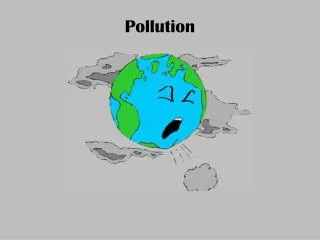
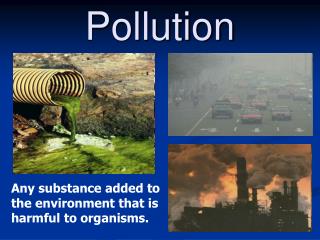
Pollution Chemicals or other harmful items that end up in the air, on land, or in the water and that make the environment unhealthy
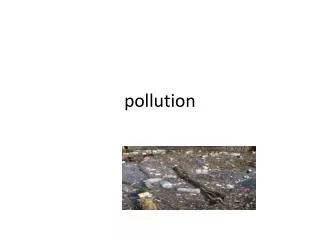
Trash can become pollution. • Flagler Beach, October 9, 2004 • Photo credit: Jerry Full
Cars and other vehicles can cause air pollution. Photo credit: EnvironmentBlog, Flickr
Smog is a type of air pollution. Photo credit: Steven Buss, Flickr
Oil spills cause pollution. Photo credit: Russian Doors/Marine Photobank • 1 LN HTD KYSTVERKET/Marine Photobank
Light can be considered pollution. Photo credit: NASA
Sound (loud noise) can be pollution. Photo credit: Purestock, ThinkStock.com
Sewage can cause pollution. Photo credit: Steve Spring, Marine Photobank
Pollution can be invisible—we cannot see fertilizer and pesticides. Photo credit: Chesapeake Bay Program, Flickr
Hot water can be pollution. Photo credit: FPL/Nuclear Regulatory Commission, Flickr
How does pollution get into the water? • Heavy rain washes things from the land into places like lakes, rivers, and oceans. • We call this “stormwater.” • Photo credit: Chesapeake Bay Program, Flickr
Polluted or Healthy?Sometimes it is easy to tell…sometimes it is harder. Photo credits: Maia McGuire
How can we keep our water and air healthy? • Recycle • Throw trash away properly • Ride a bicycle or walk instead of driving a car • Use solar or wind energy instead of energy from power plants Photo credit (clockwise from top): Eyematrix, Wavebreakmedia Ltd, jehsomwang, iriselmo; Thinkstock.com