Backyard Composting: A Comprehensive Guide for Successful Home Gardening
Discover the advantages of backyard composting with Sandra M. Frost, BHB Area Educator. Learn how composting reduces fertilizer use, alters soil pH, and improves soil structure. Get tips on the ideal location and size for your compost pile, maintaining moisture, and promoting microorganism health. Understand the dynamics of feeding your compost pile, including carbon/nitrogen ratios and suitable materials. Address common composting problems and explore cold-weather composting techniques. Unlock the potential of humus in enriching your garden.

Backyard Composting: A Comprehensive Guide for Successful Home Gardening
E N D
Presentation Transcript
Backyard Composting Sandra M. Frost BHB Area Educator – Crops
Advantages • Reduces fertilizer use • Alters soil pH • Improves soil structure
Factors • Location • Size • Water • Microorganisms • Air
Location • Shade • Out of wind • Near a source of water • Out of sight • Near garden
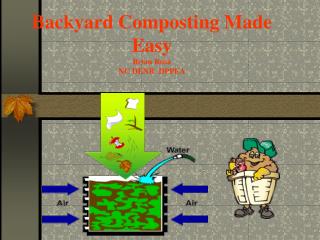
Tips for Success • Location out of wind and sun • Ideal size = 1 cubic yard • Water = wrung-out sponge • Soil biota with soil • Air – turn pile
Soil Biota • Bacteria – smallest & most numerous • Purple bacteria • Actinomycetes • Fungi – most biomass, dominant • Molds, mildew, rust, smut, yeasts • Collembolans • Millipedes • Worms
Feeding a Compost Pile • Microorganisms need food ! • Carbon / Nitrogenratio 25/1
Dynamics • Early – bacteria and fungi • Mid – high heat kills fungi • Late – Fungi work • Cellulose, lignin, bacterial bodies
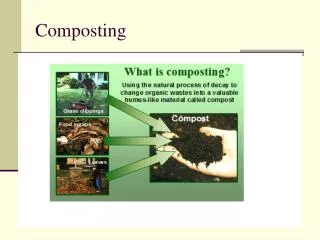
Feeding a Compost Pile • Yes– garden debris, kitchen wastes, shredded paper, manures, leaves, hay, straw, grass clippings, sod, sawdust. • No– bones, meat scraps, fats, dog and cat feces, human feces, polyester materials, plastics, diseased plants, toxic stuff.
Possible Problems • Too wet • Too dry • Compost not working • Offensive odor • Leaves matted • Flies
Cold-weather Composting • Takes longer • Cover pile with a sheet of black plastic • Add more nitrogen-rich materials • Add 1 foot higher / wider for insulation
Worms • Tunneling = aeration & structure • Castings = nutrients • 1 lb / 1 lb garbage / 1 lb compost / day • Reduce time for composting to occur • Must turn pile weekly to moderate heat • Indoors – worm box (Red Worms)
Humus • Colloidal soil organic matter • Highly charged with large surface area • Dynamic role in soil • buffers pH, chelates cations (+ ions), pH • Over time it releases N and S to soil
Compost uses • Mix in garden beds • Prepare soil for new lawns • Add to flower pots • Use as a mulch • Give it away
Structures • Not necessary