SlideServe
Menu
Préférences
© SlideServe · v2026

Enhancing Irrigated Crop Commodity Value Chains in Amhara Zones

stasia avatar
16 diapositives · 281 Views · Oct 13, 2014

This workshop showcases interventions in Amhara zones to develop commodity value chains, focusing on constraints and proposed interventions to improve fruit, vegetable, and forage production. Strategies include training, supply chain enhancement, and market linkages.
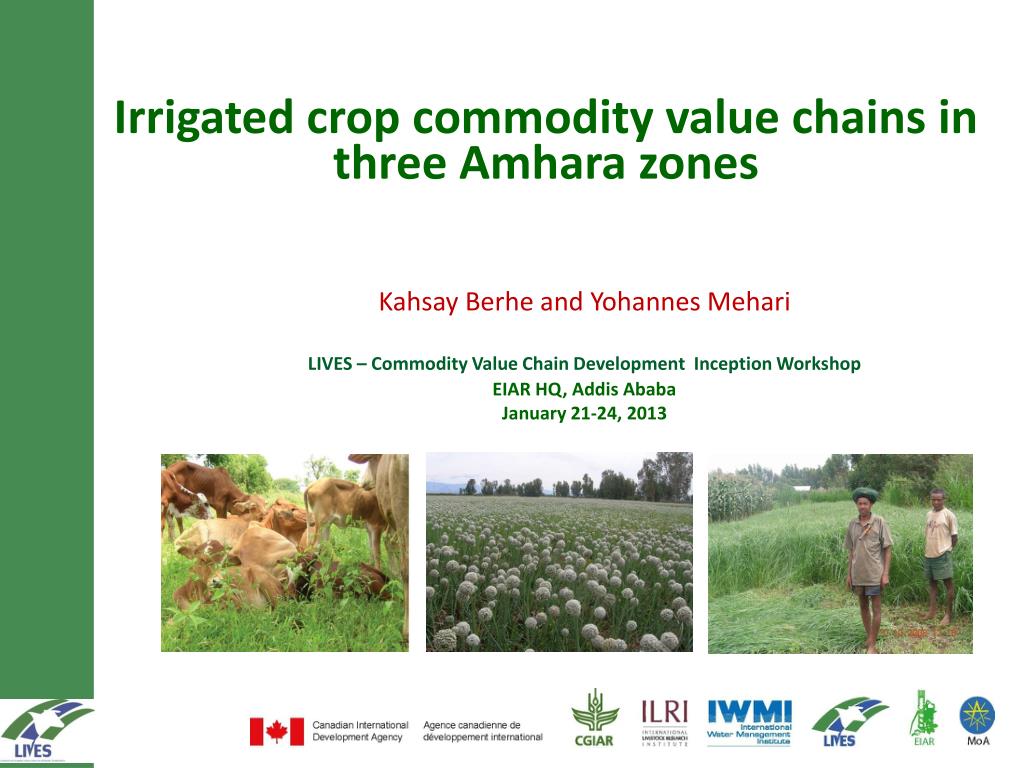
Enhancing Irrigated Crop Commodity Value Chains in Amhara Zones - slide 1
01 / 16Enhancing Irrigated Crop Commodity Value Chains in Amhara Zones
1 / 17

Télécharger la présentation

Enhancing Irrigated Crop Commodity Value Chains in Amhara Zones
Une image / un lien ci-dessous est fourni (tel quel) pour télécharger la présentation

Politique de téléchargement : le contenu du site vous est fourni TEL QUEL pour votre information et votre usage personnel ; il ne peut être vendu, concédé sous licence ni partagé sur d’autres sites sans l’accord de son auteur.Le contenu vous est fourni TEL QUEL, pour votre information et votre usage personnel uniquement. Téléchargez la présentation en cliquant sur ce lien. Lors du téléchargement, si vous ne parvenez pas à télécharger une présentation, l’éditeur a peut-être supprimé le fichier de son serveur.Pendant le téléchargement, si vous ne parvenez pas à obtenir une présentation, le fichier a peut-être été supprimé par l’éditeur.

F I N

Plus de contenu associé

Transcription de la présentation
  1. Irrigated crop commodity value chains in three Amhara zones Kahsay Berhe and Yohannes Mehari LIVES – Commodity Value Chain Development Inception Workshop EIAR HQ, Addis Ababa January 21-24, 2013

  2. Introduction • Outline • Intervention zones and districts • Commodities and PAs • Constraints in value chains • Cross cutting issues

  3. LIVES intervention districts, North Gonder zone

  4. LIVES intervention districts, West Gojam zone

  5. LIVES intervention districts, South Wello zone

  6. Commodities and intervention PAs

  7. Constraints related to irrigated crops Fruits • Input supply • Few government nurseries sourcing seedlings • Few number of seedlings • Majority of the seedlings are un improved • Improved seedlings transported from long distances • No farmer based fruit seedling suppliers (except in Kalu) • Lack of value chain approach • Food insecurity environment creating dependency (free handouts/subsidized fruit seedlings) • Less regulatory activity (Kalu district) • Marketing • Poor quality fruit produced • No marketing group for apple fruits, except for seedlings (Kalu) • Some fruits sold cheaply (farmers discouraged)_papaya ,

  8. Irrigated crops continued • Fruit production • Fruit production not widely practiced (mainly WG and NG) • Lack/poor quality fruit seedlings • Lack of skilled manpower • Limited types of water lifting equipment in use • Diseases and pests • Fruits irrigated only at seedling stage

  9. Irrigated crops continued Vegetables • Marketing • Poor/no market linkage, • No marketing group • Farmers price receivers, no bargaining power • Lack of post harvest infrastructure • Sometimes lack of buyers (shallot_Gonder z.) • Lack of market information • Monopolistic marketing regime • High price fluctuations due to seasonal supply imbalances • Lack of institutional linkages between actors in the vegetable value chain

  10. Irrigated crops continued….

  11. Irrigated crops continued • Input supply • Lack of value chain approach • Lack of improved varieties • Lack of water pump repair services in the rural areas (except Dembia) • No farmer based vegetable seed/seedling supply system • Lack of private crop spraying service • High priced input, poor priced output (garlic) • Vegetable Production • Disease outbreak • Slow replacement of varieties, deterioration (potato) • Lack of skilled irrigation agronomists,horticulture expertise • Historically, government policies focused primarily on grain crop production - food security; • Platform • No platform on irrigated crops

  12. Irrigated crops continued… • Forage/fodder production • Livestock is a secondary activity • Livestock production is lead mainly based on traditional knowledge • No/poor research output on irrigated forage/forage • Lack of knowledge on irrigated forage production • Input supply • Lack of planting material • Lack of post harvest equipment • Marketing • No research output on cost benefit analysis of irrigated forage/fodder

  13. Cross cutting issues • Knowledge management • Training in FTCs is not practically supported • Insufficient technical equipment for training in FTCs • Manpower • High staff turnover • Gender • No/few women focused activities • Environment • Win-win situation between apiarists and fruit and vegetable growers (dry season bee forage/pollination) • Uncontrolled use of agrochemicals is leading to death of bees and may pollute ground and surface water • Soil salinity

  14. www.lives-ethiopia.org Thank you

  15. Proposed interventions • Fruits • Youth groups/pump owners trained of maintenance of water pumps • Support private crop spraying providers • Establish farmer based improved fruit seedling suppliers • Establishment of water users association in schemes

  16. Proposed interventions • Vegetables • Introduction of new vegetable varieties • Introducing post harvest technologies (zero energy cool chambers) • Training on vegetable seed production systems • Regulatory body need to be strongly engaged • Demonstration of irrigation equipment in FTCs • Market linkages • Creation of marketing groups • IPM application and appropriate chemical application time