The Complex Nature of "Normal" and "Crazy": Einstein’s Role in Möbius' Dilemma
This analysis explores the intricate themes of sanity and responsibility in the context of the character Einstein, a scientist portrayed as both 'normal' and 'crazy' within the narrative. Einstein initially seeks to harness Möbius' inventions for his government's sake, embodying a duplicity in his ethical stance. His relationship with other characters, such as Möbius and Newton, reflects a broader commentary on the irresponsible use of scientific knowledge. Ultimately, Einstein's transformation through dialogue with Möbius challenges his views on responsibility and the moral implications of scientific discovery.


The Complex Nature of "Normal" and "Crazy": Einstein’s Role in Möbius' Dilemma
E N D
Presentation Transcript
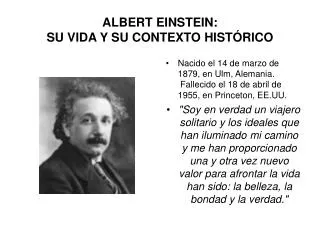
Person: Einstein Gliederung: Bedeutung im Gesamtgeschehen Wertigkeit von „verrückt“ und „normal“ Beziehung zum Salomo-Motiv Einstellung zu den anderen Personen Verantwortung des Wissenschaftlers
Bedeutung im Gesamtgeschehen • angeblich verrückter Physiker • ermordete eine Krankenschwester • eigentlich Geheimagent • möchte die Arbeiten von Möbius für seine Regierung gewinnen
Wertigkeit von „verrückt“ und „normal“ • Er weiß, dass Möbius nicht verrückt ist. • Ebenso ist er selber „normal“. • Er steht vorerst hinter den Plänen seiner Regierung (≙ Außenwelt => „verrückt“), ändert dann aber (dank Möbius) seine Meinung.
Beziehung zum Salomo-Motiv • Es besteht keine direkte Beziehung zum Salomo-Motiv. • Einstein bezweifelt, dass Möbius wirklich an die Erscheinungen des König Salomo glaubt.
Einstellung zu den anderen Personen • Möbius: Einstein will Möbius Erfindungen für seine Regierung beschaffen; Er würde ihn dafür sogar töten, weil er nur die Manuskripte benötigt. • Newton: Einstein steht in Konkurrenz zu Newton, weil dieser einem verfeindeten Geheimbund angehört und das gleiche Ziel (s.o.) verfolgt.
Einstellung zu den anderen Personen • Frl. Doktor: Einstein ahnt nicht, dass auch Mathilde von Zahnd negative Absichten hat, sondern hält sie für eine gewöhnliche Ärztin. • Inspektor Voß: Einstein kann ihn und alle anderen Personen erfolgreich davon überzeugen, dass er verrückt sei.
Verantwortung des Wissenschaftlers • Ursprüngliche Meinung: Nicht der Wissenschaftler ist für seine Erfindungen verantwortlich, sondern diejenigen, die diese ge-/missbrauchen. • Seine Meinung nach dem Dialog mit Möbius: Der Wissenschaftler muss sich seiner Verantwortung von Anfang an bewusst sein.