Download
1 / 15
170 likes | 333 Vues
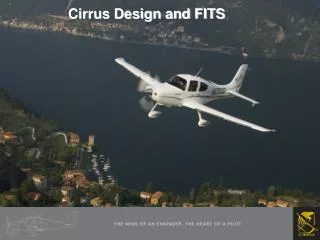
The CIRRUS Training Program, in collaboration with FITS, emphasizes real-world pilot decision-making and risk management. Launched in September 2002, the program integrates critical training elements including the CIRRUS Standardized Instructor Program (CSIP) and web-based recurrent training through Pilots World. By simulating realistic flight scenarios—such as cross-country trips with variable weather and system malfunctions—the program prepares pilots to fly safely within their capabilities, promoting the development of judgment, critical thinking, and effective risk management skills.

E N D
CIRRUS Training Program Highlights • September 2002, UNDAF and CIRRUS team up with FITS and put increased emphasis on pilot decision making and risk management into the training provided at CIRRUS • October 2003, UNDAF/CIRRUS launches the CIRRUS Standardized Instructor Program (CSIP) • September 2004 UNDAF launches the CIRRUS Aircraft Training Software (CATS) • May 2005, Pilots World, web-based re-current training launched. http://www.cirrusdesign.com/pilotsworld/ • June 2005, UNDAF/CIRRUS announces a new 3 day Transition Training course
Why FITS? • Example of a possible one day trip in a CIRRUS • Departure: Duluth, MN • Destination: Las Vegas, NV • Enroute Time: 7 hours (approximately) • 1 fuel stop • Enroute considerations • Multiple weather systems • Icing, Thunderstorms, IFR Conditions, Turbulence… • Terrain (from the plains to the mountains) • Crossing variety of airspace- Bravos, Charlie's, MOA’s, Restricted/Prohibited • A traditionally trained pilot performing conventional, maneuver based training may not of been exposed.
Since pilots are going to make such a trip regardless, it is crucial the pilot receive training that prepares them for ‘real-life’. • What does this mean to you the Instructor? • For Your Student, • Train more than the PTS • Develop Judgment & Critical Thinking Skills • Providing real-life situations • Foster Decision Making / Risk Management • Limiting assistance in normal, rare normal, abnormal and emergency situations • Make Pilot in Training Follow through
What does this mean to you the Instructor? • Provide a Value added Service to your Customer the Pilot in Training • Learn new equipment/systems prior to teaching it • Know Your Pilot in Training • What will be the main purpose for flights • How outside stressors will affect Decision Making • Build a Mentor-like relationship • Make Yourself available • Chair fly, Pose SA, ADM questions away from the airport • Prove to them that it is more than a Check-ride, or just flying
Train the way you fly, Fly the way you train • Scenario: Lesson is a three leg cross country. PT given ample time to conduct checklists, en-route procedures, system malfunctions or emergencies. • Leg 1: Review of areas of weakness in normal operations, introduction of system malfunctions (Pitot-Static, alternator 1 failure. • Leg 2: PT experience PFD failure. • Leg 3: PT experience a cabin fire in flight with a diversion.
The Day Before • Give the student a call and tell them the three different airports that you both will be visiting the next day. • Expectations You have from the Student Prior to the Brief • Aircraft Issues if any • Through Weather Brief, is a computer brief enough? • Flight Planning complete (Route, Notams) • Risks Associated with flight
Impact If you push the envelope with a Student expect them to try it as well. Famous Last words: “Wanna see something cool?” Ask yourself the question, “How would his/her decision making differ if I wasn’t in the plane?” I know you probably have heard all this before.
How Does FITS Change Instruction • It Doesn’t, We are just trying to affect the process • All the Information Available in the cockpit • Have to use the Information to make Sound Decisions • System & Information Managers • Similar to Military and Commercial Resource Management