Foundations of Early English Settlements: Charter, Government, and Key Figures
80 likes | 199 Vues
This chapter explores the early English settlements in America, focusing on essential concepts such as charters, the role of John Smith in Jamestown, and the introduction of representative government. It highlights the Pilgrims' religious journeys and the crucial contributions of Native American Squanto, who aided the settlers in their survival. Additionally, it touches on mercantilism, emphasizing the economic motive behind establishing colonies, and the Magna Carta's significance in limiting monarchical power.


Foundations of Early English Settlements: Charter, Government, and Key Figures
E N D
Presentation Transcript
Chapter 3 Vocabulary “Colonies Take Root”
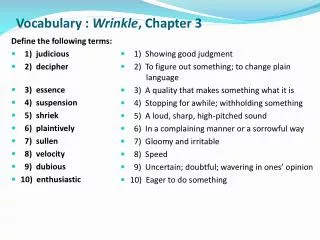
Section 1 – The First English settlements Charter • A document issued by a government that grants specific rights to a person or a company • “The king granted the merchants a charter to establish a colony called Virginia.” (page 67)
Section 1 – The First English settlements John smith • Took control of the Jamestown colony and is known for saying, “he who works not, eats not.”
Section 1 – The First English settlements Representative government • The form of government in which voters elect people to make laws for them.
Section 1 – The First English settlements Pilgrim • a person who takes a religious journey
Section 1 – The First English settlements Squanto • Native American who brought seeds of native plants to pilgrims and taught them to how plant and hunt
Section 1 – The First English settlements Mercantilism • Colonies exist to make the home country wealthy powerful
Section 1 – The First English settlements Magna carta • Document that applies to all English citizens that limits the monarch’s power