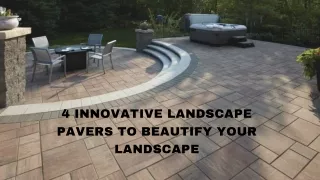
Understanding Landscape Pavers: Manufacturing, Properties, and Common Patterns
Landscape pavers, specifically designed for paving, differ significantly from building bricks due to their firing process and composition. Unlike building bricks, which are fired at lower temperatures and absorb more water, paver bricks are fired at higher temperatures for enhanced compression strength and durability. They can be produced using two main processes: molded and extruded, each creating distinct patterns and finishes. This guide covers various manufacturing techniques, site preparation methods, and explores common paver patterns to ensure a strong and aesthetic outdoor surface.


Understanding Landscape Pavers: Manufacturing, Properties, and Common Patterns
E N D
Presentation Transcript
LANDSCAPE PAVERSPaving brick are much different than building brick, based on their firing process.
Building brick are fired at lower temperatures for shorter periods of time. They contain higher water content, are more porous and therefore absorb more water.
That’s why building brick are inferior for paver construction. They lack compression strength, and can absorb 3X their weight in water, causing them to crack and disintegrate.
Paver Brick are fired at higher temperatures, which produces higher compression strength, deeper color, and lower water content.
Paver Brick are created from two processes, The extruded process, and the molding process.
Molded brick are pressed into a mold. They produce an irregular shaped, and distinctive pattern.
Molded brick have a rough appearance, they may have a sandy - gritty surface. Sand is used as a lubricant to remove the brick from the mold.
The second process is Extruded brick. They have a smooth appearance, and sharp edges.
The soft brick are pushed through a machine orifice. The bricks are then sliced with a wire to their 2” dimension.
Site Preparation Soil Compaction Static Vibratory Impact
Impact Hand Jumpin Jack
Vibratory Wacker Plate Bomag Roller
Static Asphalt Roller