Community-Based Approaches for Climate Change Adaptation in Samoa
This presentation by Ms. Leilani Duffy outlines the Samoa CBA Programme, focusing on successful community projects funded through the GEF-Small Grants Programme. It highlights the ongoing initiatives addressing climate change vulnerabilities, such as tropical cyclone resilience and coastal protection through ecosystem rehabilitation. It discusses the importance of capacity building among stakeholders, training local experts, and community engagement strategies for effective project development. Examples include mangrove restoration and flood mitigation efforts aimed at enhancing community resilience to climate change impacts.

Community-Based Approaches for Climate Change Adaptation in Samoa
E N D
Presentation Transcript
CBA Programme in SAMOA Presenter: Ms. Leilani Duffy, NC/SRC GEF-Small Grants Programme / NZAID PEF SAMOA
Portfolio of existing community projects • Current SGP portfolio • SGP 2005-2007: 58 projects approved, 18 under execution. • Most projects completed are planning grants, current projects are full-grants between $15,000 - $50,000.00 WST • Project Typologies: Theme “Capacity Building Stakeholders”
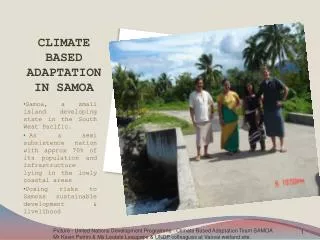
Opportunities for building resilience to CC in GEB • POTENTIAL PROJECT EXAMPLES • Community-based tropical cyclone vulnerability reduction through ecosystem protection of mangroves, wetlands and coastal zone. Example: coastal rehabilitation, tree planting, coral reef restoration, shoreline improvement • Community-based landslips / flooding vulnerability reduction through small hard solutions such as; strengthening water flow systems, waste management, reforestation to reduce soil erosion; improve water quality for consumption etc Village Consultation – Group Discussion Men and Women (Vaovai Village) Coastal erosion / mangrove ecosystem
Strategies and Support for Project Development • Support services for proposal development: • Consultant in 2005; 5 month-intern in 2007 (CCPS, proposals ; cheap but big turn-over) • Strategies for maximizing community-drivenness while ensuring proposal requirements and SPA eligibility • Inception workshop and capacity building • Little understanding of CC by CBOs. Need for local experts support, and a lot of training. • Challenge to translate local issues in CC adaptation language for proposals. • Capacity building strategies for grantees (understanding climate change, writing proposals, etc) • Workshops • Site visits • Support from local experts (consultants from private sector or ministries)
Additional Slides for PDF-B Countries • Inception workshop: • Stakeholder consultation mapping out a niche for CBA ; • Group discussion for priority areas • Government presentation on NAPA and link to CBA through communities / NGOs • Development of CPS • Information from inception workshop • Existing literature – NAPA, PACC, NSCA, First Nat Com and Second Nat Com and previous projects CBDAMPIC, CIM Plans etc • Pilot Activities • Vaovai Village marine and mangrove ecosystem rehabilitation – concept paper • In progress refining concept paper and resubmit to CBA Team NY • Lessons Learned Phase-1 CBA National Stakeholder Workshop 2005
CBA Project Process in Samoa N A T I O N A L L E V E L COMMUNITY LEVEL Adaptation Approaches 1 Hazards-based 2 Vulnerability-based 3 Adaptive capacity 4 Policy-based Water Potential CBA Project Activities Streamlining into Samoa’s NAPA Project Profiles Reforestation Health E-W Agric & Food Country Capacity & Commitment To Adapt Z & SMPs Coastal Biodiversity CB Mainstreaming into National Policies, Plans Development Priorities e.g. SDS CBA Outcomes Lessons Learned Best Practices Recommendations