Understanding Acid Precipitation: Causes, Effects, and Solutions
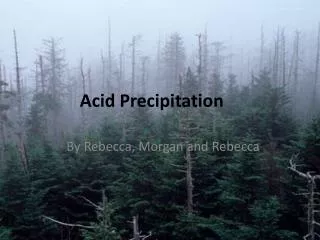
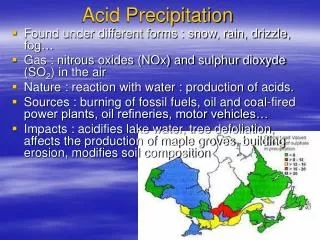
Acid precipitation, commonly known as acid rain, arises from pollutants like sulfur dioxide (SO2) and nitrogen oxides (NOx) resulting from fossil fuel combustion. Acidic compounds with a pH below 5.6 enter the atmosphere and result in harmful wet and dry deposition. This phenomenon seriously impacts ecosystems, particularly in eastern Canada where over 150 lakes are severely affected. To combat this, Canada implemented strategies targeting a 50% reduction in emissions. Effective methods include using scrubbers and promoting alternative energy sources to mitigate sulfur emissions.

Understanding Acid Precipitation: Causes, Effects, and Solutions
E N D
Presentation Transcript
ACID PRECIPITATION movie
ACIDS & BASES • Acid – loses a H+ when dissolved in H2O • organic (contain C) e.g. amino acids or acetic acid (CH3COOH) • inorganic like HCl or H2SO4 • Base – releases OH- when dissolved in water • eg. NaOH or NaHCO3 • amount of acidity is measured on pH scale • low pH (< 7) indicates acidity • high pH (> 7) indicates alkalinity (basic) • pH of 7 is neutral
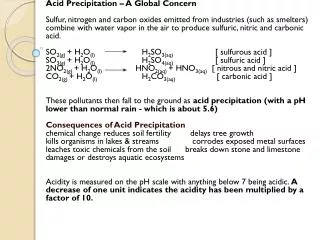
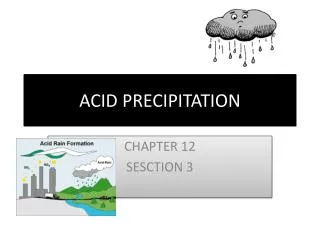
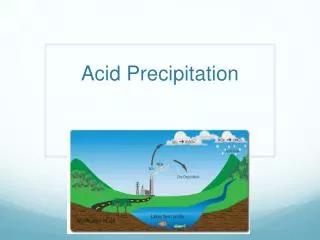
Deposition • source: pollution associated with burning of fossil fuels; leads to acid deposition. • Wet Deposition - acids with a pH below 5.6 are removed from the atmosphere in the form of rain, snow, sleet, and mist. • Dry Deposition - particles such as volcanic ash, sulphates, and nitrates are deposited onto a surface and then converted into acids when they contact water.
Sulphur dioxide (SO2) • sulphur from coal burning power plants is the greatest amount of SO2 entering the atmosphere • need to reduce sulphur emissions • best way: conserve energy or use alternative sources
3 ways to reduce sulphur emissions from coal-fired plants: • Wash the sulphur from the coal before combustion • Wash the sulphur from the smoke before it leaves the smokestacks • Remove the sulphur after combustion by using scrubbers - sprays a mixture of water and limestone (basic) into the smokestack
Nitrogen Oxides (NOX) • from vehicle emissions and burning coal • catalytic converters on vehicles help to reduce the emissions of carbon monoxide, hydrocarbons, and the nitrogen oxides • ON vehicles have to pass an emissions test every two years Movie
Govt. policies • Canada-Wide Acid Rain strategy: • implemented in 1991 • targeted reduction by 50% in most provinces • 1990-2000 AP decreased by 60% in some eastern provinces • Canada – US Clean Air Quality Agreement: • US emissions declined by 27% between 1991-1996.
Acid Rain in Canada THE EAST: • Canadian Shield & East Coast provinces (Ontario, Quebec, Nova Scotia, New Brunswick) are hardest hit • their water and soil systems can't neutralize the effects of the acid rain • > 150 lakes are “dead” and 48 000 are at risk of acid rain destruction • > 90% of the acid deposition in eastern Canada originates from emissions in the US Midwest
THE WEST • western provinces are relatively unharmed • soils are more alkaline - able to neutralize acid rain • lower levels of industrialization and natural factors such as eastwardly moving weather patterns (moves the air pollution to the east)
Natural Acid Precipitation Lightning (NOx) Volcanic Fog “vog” (SO2) Recap Movie Clip