Brain and Nervous System
Explore the intricate structure and function of the brain and nervous system, focusing on neurons, the basic communicative units, and the role of neurotransmitters and hormones in facilitating this communication. Discover neuroplasticity and its significance in brain adaptability. This interdisciplinary approach utilizes clinical observation, neuropsychology, and advanced neuroimaging techniques such as MRI and PET to analyze brain structures. Learn about crucial areas such as the limbic system, cerebral cortex, and the significance of lateralization in sensory and motor control.

Brain and Nervous System
E N D
Presentation Transcript
Brain and Nervous System Anatomy of the Brain: Structure and Function Neurons: The Basic Unit of Communication Neurotransmitters and Hormones Neuroplasticity
Interdisciplinary Approach: Neuroscience Begins with studying cells of the nervous system Neurons - up to one billion cells - inter-connections up to 50,000 per neuron Glia - outnumber neurons 10:1 - function not incompletely understood
Studying the Nervous System • Clinical observation • Neuropsychology
Studying the Nervous System • Experimental Techniques
Neuroimaging TechniquesUsed to examine structures and functioning of brain Computerized Tomography (CT): Magnetic Resonance Imaging (MRI), functional MRI (fMRI):
Neuroimaging techniques, cont’d. Positron Emission Tomography (PET): Electroencephalography (EEG):
The Nervous System Communication throughout the body Highly organized network Relays, processes, and integrates information
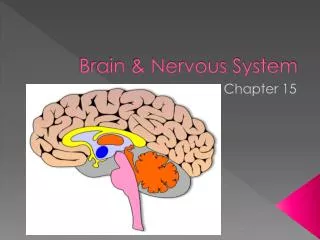
Limbic System Involved in the regulation of motivational and emotional states Aggression, fear, anxiety, appetite (stress-induced eating) Kluver-Bucy Syndrome: (Humans)
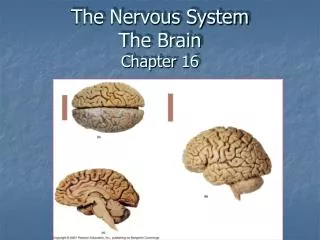
Cortical Brain Structures • 3 mm thickness; millions of cells • 80% of total brain volume • Convoluted (folded) structure increases overall amount of tissue (total area = 1 sq metre) • Divided into 2 hemispheres and 4 paired lobes: frontal, temporal, occipital, parietal
Lateralization • Two “sides” to the brain: LEFT and RIGHT hemispheres • Contralateral organization: • LEFT hemisphere controls actions of RIGHT side of body • Most structures are bilateral • Hemispheres connected through “commissures” – bundled neural fibers
Cerebral Commissures Tracts that connect the left and right cerebral hemispheres Example: Corpus Callosum
Cortical Control of Sensory and Motor Information (Sensory and Motor Homunculus)
The Developing Nervous System • Neurogenesis: • Differentiation among cells • Proliferation of cells; Migration • Nearly complete by month 5 of uterine gestation in humans • Connections among neurons and selective death of neurons: (Pruning/Wiring) Can continue into adulthood.
The Neuron Characteristics of the Neuron Communication within the Neuron Communication between Neurons
Communication within the Neuron Distribution of charged particles; ions Sodium; Potassium
Communication within the Neuron Action Potential Momentary change from about -70 mV to +50 mV.
Communication between Neurons Neurotransmitters and Receptors
Endorphins, NPY, PYY, Urocortin, Substance P.