Download
1 / 15
150 likes | 258 Vues
Learn about initial grinding techniques (wet & dry), aggregate exposure classes (A to D), repairs using dust particulate, densifying concrete for durability, coloring options, honing & polishing processes, gloss levels, and more for achieving stunning polished concrete floors.

E N D
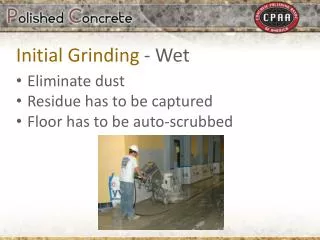
Initial Grinding -Wet • Eliminate dust • Residue has to be captured • Floor has to be auto-scrubbed
Initial Grinding - Dry • Dust has to be captured • Particulate can be used for patching • Floor has to be vacuumed • Honing and polishing • always performed dry
Repairs • Holes • Surface damage • Air hole voids • Spalls • Small and micro cracks • Dust particulate can be • mixed with patching material
Densifying • Denser the concrete, the better the results • Hallmark characteristic of polished concrete is that the surface is harder, more durable, and more stain-resistant because of the densifier
Densifying Densifier reacts with excess calcium hydroxide to form calcium silicate hydrate to fill the capillaries left by hydration
Coloring • Integral color in concrete mix • Water-based dyes • Acid stains • Solvent-based stains
Honing and Polishing Ever increasing abrasive grits used to establish gloss levels
Reflective Clarity • Degree of sharpness • Reflective crispness of overhead • objects • Viewed 5 ft. above and perpendicular • ASTM D 5767
Reflective Sheen • Degree of gloss reflected from surface • Viewed 20 ft. from and at an angle • ASTM D 4039