Download
1 / 8
80 likes | 227 Vues
This guide covers the formation of sedimentary rocks, detailing the processes of weathering, erosion, compaction, and cementation. It breaks down the various types of sedimentary rocks based on grain size, including clastic, chemical, evaporate, and biochemical rocks. Learn about very fine clay, coarse sand, and unique formations such as conglomerates and coal. Key examples like gypsum from Lechuguilla Cave and rock salt highlight the impact of both organic material and chemical processes in rock formation. Discover the fascinating world of sedimentary geology.

E N D
Rock cycle –Sedimentary notes Brought to you by: Mr. Henderson
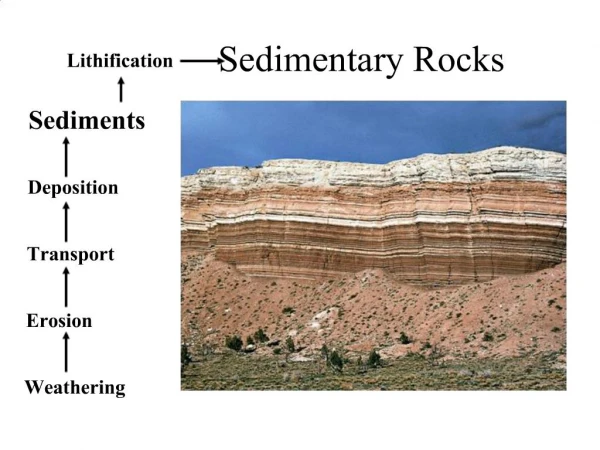
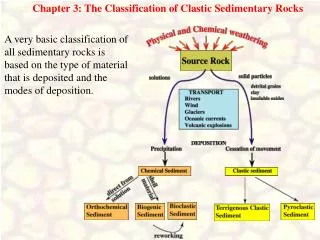
Formation • Process of changing rocks due to… • Weathering (breakdown of rock) • Erosion (movement of weathered material) • Compaction of these sediments and cementation with CaCO3 or SiO2
Types of Sedimentary Rocks • Clastic – based on grain size • Very fine – clay • Fine - silt
Types of Sedimentary Rocks – Cont’d. • Coarse – sand • Moderate – Arkose • Pebble – Conglomerate • Boulder
Types of Sedimentary Rocks – Cont’d. • Chemical – due to a chemical process or organic material being present Rock Salt
Types of Sedimentary Rocks – Cont’d. • Evaporate – due to the evaporation of water • Biochemical – organic material such as decaying flora present Gypsum Coal
Types of Sedimentary Rocks – Cont’d. • Reactive – effervescence in presence of acid