Unsettling Landscapes: Exploring Vulnerability and Un-homeliness in Climate Change
This paper by Dr. John Wylie delves into the intricate relationship between landscape, locality, and environmental change. By examining familiar everyday landscapes, it highlights how climate change can be viewed as a relational phenomenon at the local level. The work emphasizes the notions of vulnerability and un-homeliness, exploring how human existence is influenced by forces beyond control. Through theoretical frameworks, the paper reveals how unsettling landscapes reflect a deeper understanding of our connection to climate and the complexities of change.


Unsettling Landscapes: Exploring Vulnerability and Un-homeliness in Climate Change
E N D
Presentation Transcript
Unsettling Landscape Dr John Wylie Associate Prof of Cultural Geography University of Exeter j.w.wylie@exeter.ac.uk
1. Concepts of landscape, locality, and environmental change 2. Unsettling landscape: vulnerability and un-homeliness
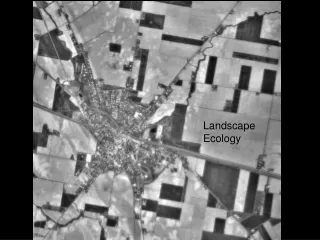
1. Concepts of landscape, locality, and environmental change ‘A focus on the familiar landscapes of everyday life offers an opportunity to examine how climate change could be researched as a relational phenomenon, understood on a local level’ (Brace & Geoghagen, 2011, p.284) ‘It is part of our argument that landscape – in all its multifarious definitions and theorizations – grounds an understanding of climate and the ways it might change in a fundamental way’ (ibid, pp.288-289).
2. Unsettling landscape: vulnerability and un-homeliness ‘Thinking through the human in terms of a constitutive vulnerability to forces beyond its control’ N. Clark (2010) ‘Volatile Worlds, Vulnerable Bodies’, TCS, p.47 Landscape names ‘the thought of presence as withdrawn from itself: estranged and unsettled presence, from which all the gods have departed and the humans are always still to come’ J-N Nancy (2005) ‘Uncanny Landscape’ p.62
From ‘The Grounds’ by Phillip Gross (The Water Table, 2009) Indefinable grounds: don’t try to set foot, not even if some craft could steady in these mud-thick shallows (almost ground) by ground almost as loose as water. Don’t count on your fine distinctions then.