Download
1 / 11
110 likes | 209 Vues
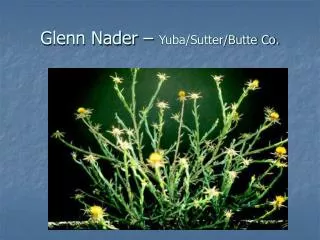
Learn about the impact and control methods for Yellow Starthistle in Yuba, Sutter, and Butte Counties. Discover its deep tap root, toxicity to horses, and methods like mowing, grazing, Roundup, and biocontrol. Eradication vs. management, seed bank dynamics, and long-term commitment are discussed.

E N D
Impact of YST • Deep tap root – mines water (66%) • Barbs - recreation
Poisonous • Horses only • Alkaloid that destroys brain • Toxic to horses (600lbs) 1 to 3 months • Will not occur if there is sufficient feed • Fall is the highest report period
Biology = Control • Annual • Germinates with sunlight and moisture • Seed viable for 3 to 5 years • Produces 50 – 200 million seeds/Ac • Requires 2 million to restock
Eradication vs Management • Seed bank dynamics • 98% control to deplete seed bank • Eradication long term commitment 4-5 years
Mowing • Annual plant • Start to flower (2-5%) • Cut below lowest branch or growth point • Mower cut at 4” • Grass competition –shade=>higher branching
Competition • Bare soil – Sunlight • Rose Clover • Annual Rye • Harding grass
Grazing • Managed into it by grazing • Light grazing Feb to March • Heavy mid April to June
Roundup • Annual grasses • Spray 5 % flowering • With dye on clean up after 2 years Transline • Acidification
Transline • ½ pint (1/4?) • Apply Jan to Feb • More than a single year program • Trans/Trans/Roundup w/dye • Rangelands • long term investment • Isolated patches • Susceptibility chart in handout
Biocontrol • 5 insects released • 30% control at best • All feed on the seed head • Others have fed on other crops • Long term answer