Download

1 / 10
100 likes | 220 Vues
Discover the complex dynamics of Manifest Destiny, a 19th-century belief in American expansion from coast to coast. This concept drove settlers to perceive their westward movement as a divine right, often disregarding the rights and lives of Native Americans, whom they viewed as heathens. Learn about the cultural and social implications of this ideology, the horrific actions taken against Indigenous populations, and how art symbolized these historic events, including the somber legacy of the Trail of Tears.

E N D
Warm-Up • Spot the differences and write them down.
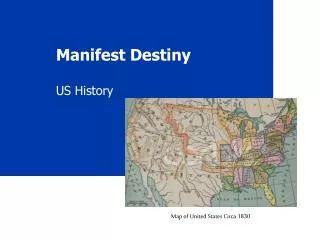
Manifest Destiny • “Manifest Destiny is a term for the attitude prevalent during the 19th century period of American expansion that the United States not only could, but was destined to, stretch from coast to coast. This attitude helped fuel western settlement, Native American removal and war with Mexico.” • Americans felt that their destiny was to expand across America and they had God’s support. • Generally a Christian belief. • Many Native Americans were considered heathens because they practiced polygamous religions.
Why would American settlers think that they were should live from coast to coast? What about the Native Americans? Why weren’t they cared about?
Effects. • Horrific actions could be taken because they believe settlers believe they are doing God’s work. • Since Native Americans are not Christians they are of less importance and considered heathens. • Westward Expansion increased.
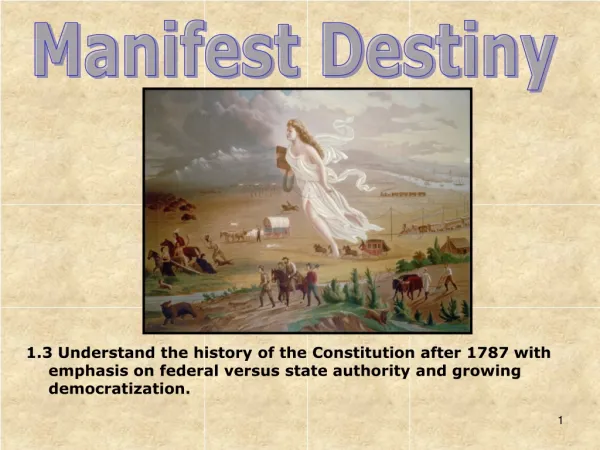
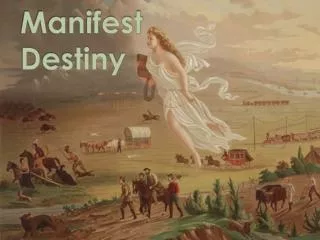
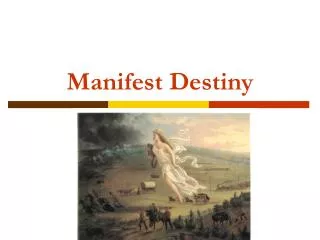
Symbolism in Artwork • Symbols represent something without clearly stating what it is.