Understanding Public Policy Influence in Civic Participation
Public policy represents the government's approach to address community issues. Individuals can influence public policy through various methods, including participating in politics, voting, campaigning, and lobbying. Interest groups also play a significant role by organizing around common causes, making political contributions, and advocating their viewpoints to government officials. Mass media shapes public opinion by bringing attention to specific issues, providing a platform for discussion, and holding officials accountable. This overview explores the dynamics of public policy, influence, and the political spectrum, from conservatives to liberals.

Understanding Public Policy Influence in Civic Participation
E N D
Presentation Transcript
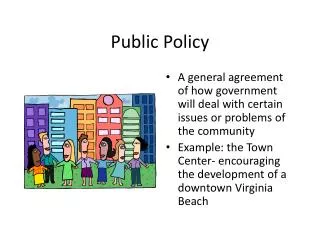
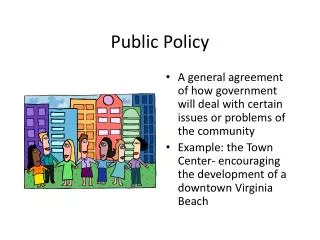
Public Policy • A general agreement of how government will deal with certain issues or problems of the community • Example: the Town Center- encouraging the development of a downtown Virginia Beach
How individuals influence public policy • Participating in politics • Voting • Campaigning • Expressing opinions
How individuals influence public policy (cont.) • Lobbying • Trying to persuade the government to support your goals • Demonstrating • Writing letters • Joining interests groups
Interest Groups • Group of people who come together to support a common cause • Strength in numbers
How interest groups influence public policy • Identifying issues • Making political contributions • Lobbying government officials • Representing different viewpoints • Publicizing issues
Mass Media influence on public opinion and public policy • Focusing public attention on selected issues • Offering a forum in which opposing viewpoints are communicated • Holding government officials accountable to the public • Providing the opportunity for government officials to use the media to communicate with the public
The Political Spectrum • Reactionaries • Very conservative • Want to return to traditional policies (the way things were) • Radicals • Very liberal • Want sweeping changes in government policies • Willing to resort to violence
The Political Spectrum • Conservatives • Want limited government • Oppose government regulation • Believe the individual should take care of himself • Support ending affirmative action, reinstating school prayer • Tend to be Republicans • Liberals • Want more government • Believe government should help the individual • Support programs for the poor, public housing • Tend to be Democrats
The Political Spectrum • Moderates • Move between conservatives and liberals • Support government action in some areas and reject it in others
http://www.cyberlearning-world.com/lessons/civics/electoral_process.htmhttp://www.cyberlearning-world.com/lessons/civics/electoral_process.htm