Download
1 / 8
80 likes | 206 Vues
This comprehensive guide delves into the human digestive system, exploring its vital components: from the oral cavity to the anus. It covers the roles of structural elements like teeth, tongue, salivary glands, liver, gallbladder, and pancreas in digestion. Key processes such as peristalsis, bolus formation, and nutrient absorption are highlighted. Emphasizing the functions of organs like the stomach and intestines, as well as the production of bile and digestive enzymes, this resource provides a clear overview of how our bodies break down food and assimilate nutrients.

E N D
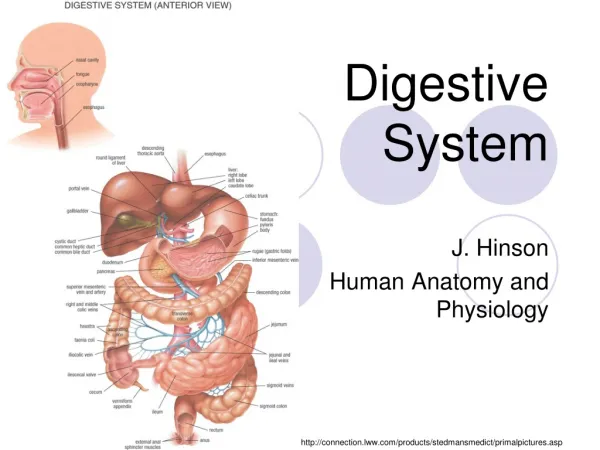
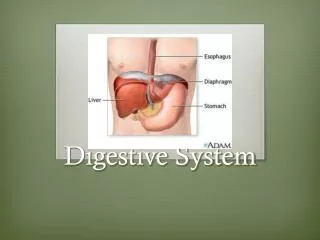
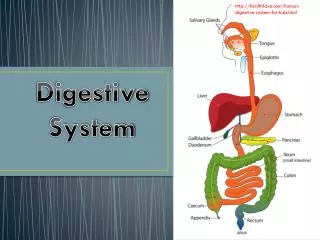
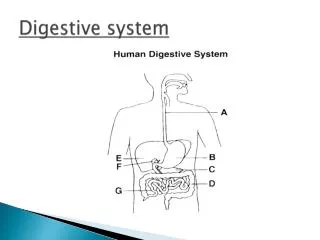
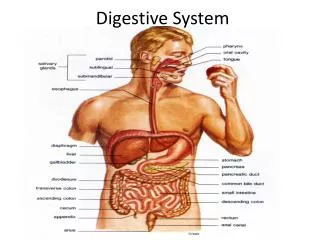
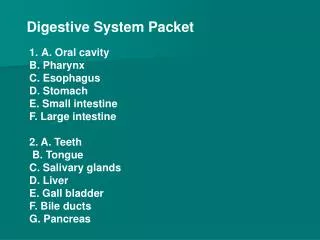
Digestive System Packet • A. Oral cavity • B. Pharynx • C. Esophagus • D. Stomach • E. Small intestine • F. Large intestine • 2. A. Teeth • B. Tongue • C. Salivary glands • D. Liver • E. Gall bladder • F. Bile ducts • G. Pancreas
3. Peristalsis • 4. Bolus • Gall bladder - Storage of bile • Pancreas - Production of digestive enzymes, • also insulin and glucagon. • Large intestine – Absorption of water and minerals • Liver – Production of bile, detoxification • 6. A. Vocalization • B. Mastication (Chewing) • C. Swallowing • 7. Anterior – wetting of food with saliva • Posterior – moves food to the esophagus
8. A. bitter B. Sour C. Salty D. Sweet 9. Water and mucus 10. A. Sublingual – under floor of mouth B. Submandibular – below mandibular angle C. Parotid – In front of and below ear 11. Parotid 12. With the bone – the root 13. Enamel 14. 70% minerals – made up of living cellular Tissue – somewhat like bone, but harder.
15. A. Nerves B. Veins C. Arteries 16. Gums 17. A. Fundus – top B. Body – middle C. Pylorus – End 18. A. Cardiac – top – beginning of stomach B. Pyloric – bottom – where stomach enters the duodenum.
19. A. Food storage B. Secretion of gastric juices C. Churning of food D. Absorption 20. Rugae 21. Irregular folds help to increase the surface area, increase the amount of glands secreting gastric juices and increase the digestion. 22. Highly convoluted (folded), thin walled, it is divided into 3 parts. 23. Absorption
24. Mesentary 25. A. Duodenum B. Jejunum C. Ileum 26. Increases the surface area for maximum absorption of nutrients. 27.A. Cecum B. Ascending colon C. Transverse colon D. Descending colon E. Rectum ending in the anus 28. Cecum
29. Right hand side under the cecum 30. Sphincter 31. Inflammation of the veins 32. Water, vitamins, Minerals 33. Liver 34. Wedge shaped 35. Larger in size 36. Larger than the body area 37. A. Secretion of bile B. Metabolize proteins, fats and carbohydrates C. Storage area 38. A. Liver B. Gall bladder C. Duodenum (small intestine)
39. Sends bile to small intestines to emulsify fats 40. Liver 41. Emulsify fats – breaks it down into fat droplets