Naval Meteorology and Oceanography
90 likes | 224 Vues
The Naval Meteorology and Oceanography National Symposium in Norman, OK focused on the integration of multi-function phased array radar in enhancing naval operations. RDML (sel) David Titley emphasized the role of precise oceanographic data in reducing uncertainty and improving the safety and effectiveness of warfighting operations, including anti-submarine warfare and naval aviation. Key topics included real-time weather impact on mission efficiency and the necessity of partnerships within the DoD and other agencies to maximize the Navy’s $150B investment in maritime capabilities.


Naval Meteorology and Oceanography
E N D
Presentation Transcript
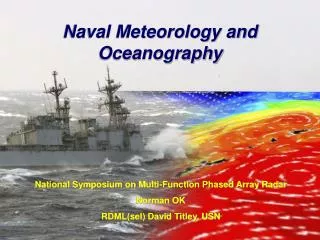
Naval Meteorology and Oceanography National Symposium on Multi-Function Phased Array Radar Norman OK RDML(sel) David Titley, USN
Naval Oceanography Alignment Speed to effect Precision to effect International influence Reduced uncertainty Safety of Operations WARFIGHTING FOCUSED KNOWLEDGE-CENTRIC Oceanographic Operations Anti-Submarine Warfare Naval Special Warfare Mine Warfare increased emphasis Warfighting Intelligence Support Shaping Precise Time and Astrometry maintain excellence Navigation • Naval Oceanography • ~$600M operating resources • 12 ships (7 T-AGS, 5 T-AGOS) • 2300 military, 1200 civilians Safety Fleet Operations increased efficiency Maritime Operations Aviation Operations On a 24x7 readiness cycle, the people deliver strategic, operational and tactical effects that continually shape and provide advantage in the battlespace: FNMOC NAVO CUS USNO
Safety • Smart: • Sensing • Forecasting / Automation • Communications • Partnering • NWS • USAF • Other Countries $150B of Ships, A/C and Shore Assets OfficersChiefsJunior EnlistedCivilians Total 27 22 179 12 240
Importance of Real Time Weather • From FY90-98, weather related mishaps to the aviation community* were found to have caused: • Produced 100 deaths - 11 fatalities per year • $69 million in damage to aviation forces • A temporal-based weather display would provide an invaluable wartime advantage over the enemy and allow for safer peacetime and wartime operations. • Increased sortie rate • Better training opportunities • US Marine Corps support – Expeditionary Capability • Small footprint • Mobile * Cantu, 2001
At Sea Weather RadarBenefits for the Warfighter • Environmental phenomena: • Precipitation Areas & Intensity • Radial winds • Effects of these phenomena: • Reduced visibility • Turbulence • Wind shear • Hazardous weather in area operationally affects • Carrier positioning • Departure & arrival procedures • Aircraft diversions • Tanker rendezvous • Marshal Increases Situational Awareness, Safetyand Mission Effectiveness
Hazardous Weather Detection and Display Capability (HWDDC) At Sea Wx Radar Operational Concept Tactical Radar Bridge PriFly CATCC/HDC SIPRNET 23TV Extract weather data Display weather returns Distribute displays
Conclusions • Naval Oceanography’s success is inextricably linked to the success of our DoD and Inter-agency partners • NOAA Line Offices • NASA • USAF, National Geospatial Intelligence Agency • The investment in Naval Oceanography protects the Navy’s ~$150B investment in ships, aircraft, submarines and shore installations. • Increased warfighting effectiveness when real-time wx radar data are available in a combat zone