Download
1 / 8
80 likes | 173 Vues
Photosynthesis is the process by which plants, algae, and some bacteria produce sugar and oxygen from carbon dioxide, water, and sunlight. This endergonic reaction occurs in two steps: the light reaction in the thylakoid membranes of chloroplasts and the dark reaction in the stroma. Through photosynthesis, sunlight energy is converted into chemical energy (ATP) and sugars are created. This process is vital as all food energy on Earth can be traced back to photosynthesis.

E N D
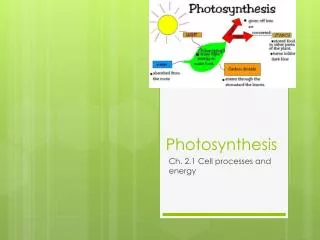
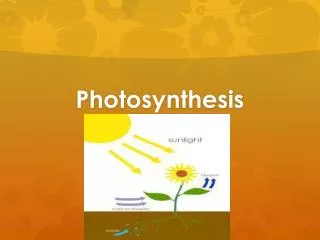
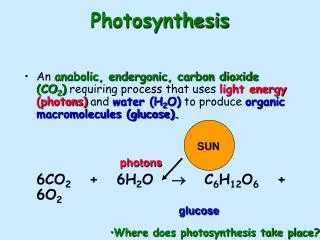
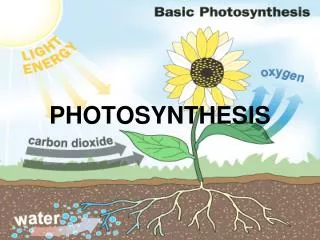
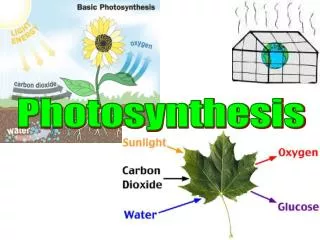
PhotosynthesisOverview • Defined: Production of sugar & oxygen from CO2, water, & sunlight • Endergonic reaction: Requires energy • Who: Plants, algae, some bacteria • End Result: Sugar for food and oxygen (waste) • 2 step process
Step 1: Light Reaction • Where: Thylakoid membranes of chloroplast • What happens? • 1) Light energy converted into chemical energy (ATP) • 2) Water (H2O) broken apart and the oxygen is released as a waste product • How: Chlorophyll absorbs light energy and electrons become excited • Excited electrons bond ADP + P to create ATP • Sunlight energy has been converted into chemical energy (ATP) • No sugar created…yet!!!
Step 2: Dark Reaction • Where: Stroma (fluid interior) of chloroplast • What happens? ATP (from light reaction) creates sugars • How? • ATP breaks apart CO2 + H2 from water • Atoms recombine into glucose and other sugars • Sugar is used by plants, algae, and some bacteria as a food source (autotrophs)
The Big Picture • Reasons I love autotrophs! • All food energy on earth can be traced back to photosynthesis • Autotrophs absorb CO2 • Problem: Greenhouse Effect • The Good: GHE naturally warms Earth by trapping heat • The Bad: CO2 from fossil fuels traps excess heat near Earth’s surface • AKA: Global Warming • Solutions: Regrow plants to absorb the extra CO2, reduce use of fossil fuels
QuickReview • CO2, Water, Sunlight are used during photosynthesis • Sugar and Oxygen are created as a result of photosynthesis • Photosynthetic life forms the basic of life on earth