Understanding the Metric System: History, Measurement, and Its Global Standardization
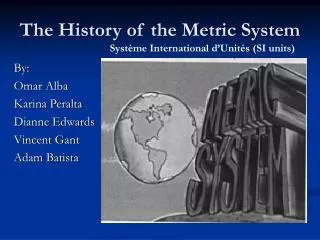
The metric system is a comprehensive, coherent form of measurement adopted worldwide. Originating from the French National Assembly and refined by early researchers like J.R. Benoit and PFA Mechain, it simplifies conversions with a set of 16 regular prefixes. The meter, defined by the wavelength of light, is emblematic of this system's precision and clarity. This guide explores its history, advantages, and teaching methodologies, facilitating a deeper understanding of metric measurements and their invaluable role in science and daily life.


Understanding the Metric System: History, Measurement, and Its Global Standardization
E N D
Presentation Transcript
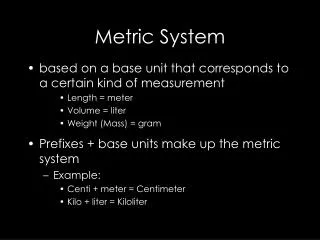
Metric System • Insured worldwide standard
Quadrant Surveyors PFA Mechain JBJ Delambre
Early Researchers J.R. Benoit
1 meter = 3.28 feet Meter Stick
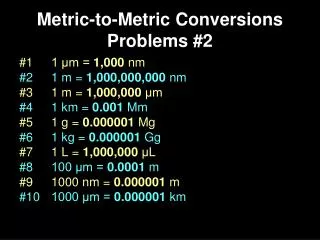
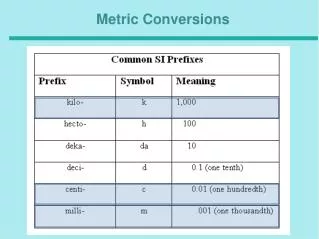
tera- (T-) 1012 1 trillion giga- (G-) 109 1 billion mega- (M-) 106 1 million kilo- (k-) 103 1 thousand hecto- (h-) 102 1 hundred deka- (da-)** 10 1 ten deci- (d-) 10-1 1 tenth centi- (c-) 10-2 1 hundredth milli- (m-) 10-3 1 thousandth micro- (µ-) 10-6 1 millionth nano- (n-) 10-9 1 billionth Prefixes
Prefixes • Metric Prefixes can be used with any base unit.
Teaching Prefixes Learn the 16 regular prefixes by counting Change them by jumping the decimal point 3 places Don’t call this “converting units” Set calculator display to ENG Avoid the irregular prefixes (h, da, d, c) except in cm, cm2, cm3, dm3, hm2, hm3
Advantages of Metrics No conversions No fractions No numbers to memorize No awkward rows of zeroes Complete Coherent Unambiguous symbols Only 30 units The world standard
The meter is the length of the path travelled by light in a vacuum during a time interval of 1/299 792 458 of a second. (1983)