Understanding Adrenoleukodystrophy: Causes, Symptoms, and Treatment Options
Adrenoleukodystrophy (ALD) is a severe genetic disorder predominantly affecting males and characterized by the accumulation of very long-chain fatty acids, damaging the myelin sheath of neurons. Symptoms can include behavioral changes, poor memory, visual loss, seizures, and difficulties with coordination and speech. Diagnosis often brings devastation to families, as untreated ALD leads to rapid deterioration and can be fatal within 3-5 years. Current treatments aim to stabilize progression through innovative strategies like bone marrow transplants and gene therapy, although a definitive cure is still lacking.

Understanding Adrenoleukodystrophy: Causes, Symptoms, and Treatment Options
E N D
Presentation Transcript
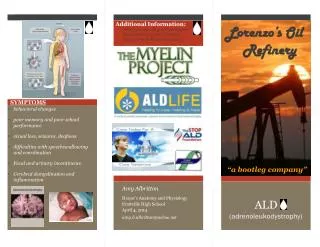
Lorenzo’s Oil Refinery • http://ghr.nlm.nih.gov/search?query • http://omim.org/entry/300100 • http://www.childrenscancer.org SYMPTOMS Additional Information: Amy Albritton Honor’s Anatomy and Physiology Prattville High School April 4, 2014 amy.b.albritton@acboe.net (adrenoleukodystrophy) behavioral changes poor memory and poor school performance visual loss, seizures, deafness difficulties with speechswallowingand coordination Fecal and urinary incontinence Cerebral demyelination and inflammation “a bootleg company” ALD
X-linked recessive genetic disorder that • affects males. • ‘adreno’ refers to the adrenal glands; • ‘leuko’ refers to the white matter of the • brain, and ‘dystrophy’ means abnormal • growth or development. • A peroxisomaldisease What causes ALD? • damages the myelin sheath on neurons • no production of protein that helps break • down fatty acids • accumulation of the saturated very • long chain fatty acids in all body tissues. “When we found out that all three of our boys, Owen, Dylan and Jacob, had it, we were devastated.” Darlene, mother of the boys affects all ethnic groups most common inherited leukodystrophy minimum incidence ranging from 1:42,000 untreated, ALD will cause death in three to five years progression can be stabilized no cure yet Our Research Treatment Plan: What does it do to the CNS? mutation in the ABCD1 gene What is Adrenoleukodystrophy? bone marrow transplant intravenous mesenchymal stem cells during the period before the transplant high-dose antioxidant therapy provide families with emotional support, networking opportunities, and other kinds of assistance Adrenal steroid replacement therapy Hematopoietic stem cell transplantation gene therapy allogeneic hematopoietic stem cell transplantation (HSCT)