
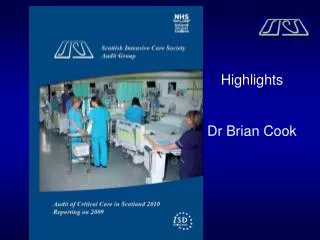
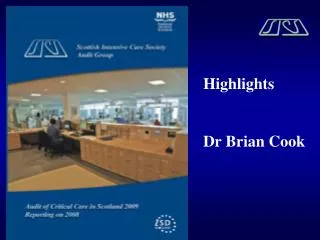
Highlights Dr Brian Cook
Dr. Brian Cook highlights the role of SICSAG in improving critical care quality in Scotland. By monitoring activities and outcomes, SICSAG aims to elevate care standards through engagement with clinical staff and effective information sharing for quality improvement. Key areas of focus include staffing levels, infection control, early discharges, and readmission rates. This comprehensive approach seeks to address challenges like delayed discharges and mortality rates, ensuring that the Scottish critical care system continues to evolve and provide high-quality patient care.

Highlights Dr Brian Cook
E N D
Presentation Transcript
Highlights Dr Brian Cook
SICSAG: Why? “We exist to improve the quality of care delivered to critical care patients by monitoring and comparing activities and outcomes across Scottish Critical Care. We intend to drive standards and quality of care upward by engagement with clinical staff, and to provide them with information that can be used in quality improvement programmes.”
Quality of Care: Quality Indicators? • Structure: • Numbers/Occupancy • Staffing levels (Cons, Nursing, Others) • Quality Improvement Programmes • Infection Control Strategies • Process: • Out of Hours Discharges/Admissions • Early Discharges • Delayed Discharges • Readmissions • Outcome • Mortality: SMR • HAI’s (Not comparative between units)
Response to SMR > 2SD from Mean • Letter to unit lead and managers May (17/5/10) • Suggested courses of action • Case mix unusual? • Data accurate and complete? • Selected case note reviews? • Discuss with referring specialties? • Supporting evidence- local and other audits? • External review? • Further analysis by SICSAG • Report from unit to SICSAG by July (20/7/10) • SICSAG report published with original data July (27/7/10)
“Bed blocking epidemic in Scottish intensive care units” 28th July 2010
Quality of Care: The Future • SICSAG funded in current form (ISD/NHS QIS) • Quality Indicators NHS QIS/NHS Scotland • Structure • Process • Outcomes • SPSP measures • HAI surveillance HPS











![[PDF] DOWNLOAD Dr. Atkins' Diet Cook Book](https://cdn7.slideserve.com/12650438/slide1-dt.jpg)