The Impact of Colonialism on African Trade and Governance
10 likes | 123 Vues
This study explores the intricate dynamics of Indian trade within Africa, the effects of European colonization, and the enduring challenges faced by African nations. It highlights the importance of trade routes established by camels and the interconnectedness with Europe post-1492. The slave trade, mineral exploitation, and the establishment of European colonies in the late 1800s altered the socio-political landscape, leading to ineffective governance and ongoing struggles with disease, famine, and corruption. The legacy of these events continues to shape modern Africa's development.


The Impact of Colonialism on African Trade and Governance
E N D
Presentation Transcript
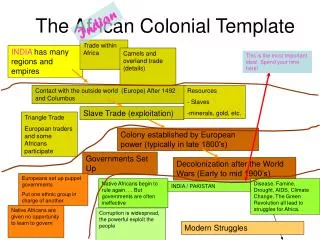
The African Colonial Template Indian Trade within Africa INDIA has many regions and empires Camels and overland trade (details) This is the most important idea! Spend your time here! Contact with the outside world (Europe) After 1492 and Columbus Resources - Slaves -minerals, gold, etc. Slave Trade (exploitation) Triangle Trade European traders and some Africans participate Colony established by European power (typically in late 1800’s) Governments Set Up Decolonization after the World Wars (Early to mid 1900’s) Europeans set up puppet governments Put one ethnic group in charge of another Native Africans begin to rule again. . . But governments are often ineffective Disease, Famine, Drought, AIDS, Climate Change, The Green Revolution all lead to struggles for Africa. INDIA / PAKISTAN Native Africans are given no opportunity to learn to govern Corruption is widespread, the powerful exploit the people Modern Struggles