Essential First Aid: Immediate Care Techniques and Guidelines
First aid is the critical, immediate care provided to an individual who is injured or suddenly ill, until professional medical assistance arrives. The main goals of first aid include stopping life-threatening dangers, ensuring the person's safety from further harm, and securing appropriate medical help. Key steps for administering first aid include prioritizing safety, approaching calmly, assessing responsiveness, ensuring airway and breathing, checking circulation, and addressing injuries. Understanding and effectively using various bandages is also essential for proper care.

Essential First Aid: Immediate Care Techniques and Guidelines
E N D
Presentation Transcript
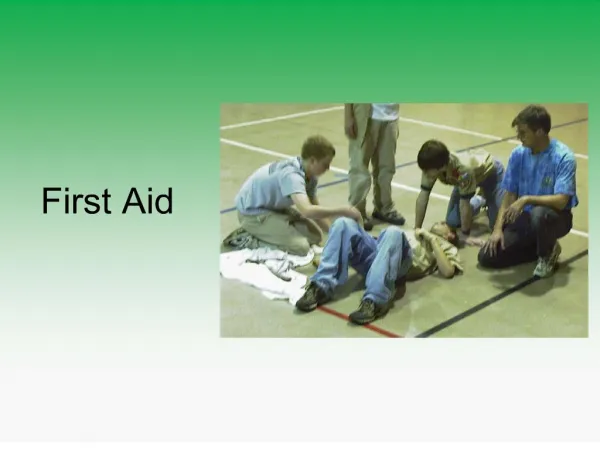
First Aid First aid is the immediate and temporary care given to someone who is injured or suddenly taken ill, before the arrival of professional and capable medical assistance.
The primaryobjective of first aid is: • Stop life-threatening dangers. • Keep the person safe from further harm. • Get proper medical attention for the person.
-First Aid's Golden Rule "Do not do anything if you do not know what to do."
Steps in Administering First Aid • Safety First. • Approach with Calm. • Establish Unresponsiveness.(“Sir, are you okay sir?”) • Airway. • Breathing.(using mouth-to-mouth, mouth-to-nose, or mouth-to-stoma.) ("Look, Listen, and Feel) • Circulation. • Get Medical Attention. • Check for Injuries. • Keep the Injured Person Safe.
Bandage a materials for covering the wounds and aids for injuries Uses of Bandage
Traction Strap • Soot sanina Randie V. Abunas Teacher – I @ Subanen Agricultural NHS