WORKING THROUGH RESISTANCE
This presentation explores the psychological dynamics of resistance in addiction treatment, influenced by Freud's concepts of defense mechanisms such as denial, rationalization, and projection. We delve into the stages of change model proposed by Miller and Rollnick, emphasizing a non-confrontational approach that recognizes normal reactions in individuals with addiction. Key techniques include motivational interviewing strategies, problem recognition, and reframing. Discover how to effectively guide clients through contemplation to action while avoiding common therapeutic traps.

WORKING THROUGH RESISTANCE
E N D
Presentation Transcript
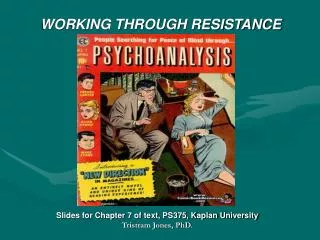
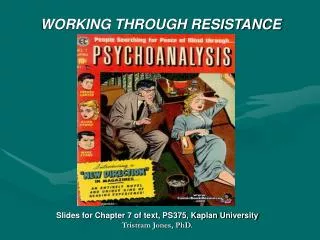
WORKING THROUGH RESISTANCE Slides for Chapter 7 of text, PS375, Kaplan University Tristram Jones, PhD.
Yes, Addiction is like a LOVER! • ONLY WITH ALITTLE BIT OF A TWIST!
So a lot of the same neurosis apply! Like Freud’s Big Ten • Denialarguing against an anxiety provoking stimuli by stating it doesn't • Displacementtaking out impulses on a less threatening target • Intellectualizationavoiding unacceptable emotions by focusing on the intellectual aspects • Projectionplacing unacceptable impulses in yourself onto someone else • Rationalizationsupplying a logical or rational reason as opposed to the real reason that you were fired. • Reaction formationtaking the opposite belief because the true belief causes anxiety • Regressionreturning to a previous stage of development: sitting in a corner and crying • Repressionpulling into the unconscious forgetting sexual abuse from your childhood due to the trauma and anxiety • Sublimationacting out unacceptable impulses in a socially acceptable ways • Suppressionpushing into the unconscious things that causes you anxiety
THERE IS A CLASSIC METHOD FOR BREAKING THROUGH RESISTANCE IN AOD SUFFERERS!
So what works better? Well, WORKING with resistance is a better idea! BUT DO MILLER & ROLLNICK HAVE THE ANSWER???
What do Miller & Rollnick suggest? • THEY DENY THAT ADDICTS • ARE IN DENIAL! • They call refusing to accept that there • is a problem is simply a “normal • reaction!” They also say the behavior • of the therapist creates the resistance in in clients! This becomes a vicious • cycle in which confrontation=resist- • ance= more confrontation, etc!
HERE ARE THE STAGES OF CHANGE THAT MILLER & ROLLNICK PREFER: PRECONTEMPLATION STAGE
CONTEMPLATION STAGE • Subject vacillates between accepting help and rejecting it!
DETERMINATION STAGE • Subject may be open to accepting help if properly THERAPIZED!
ACTION STAGE • Subject may initiate action by herself—go on the wagon. This will be stressful without help!
RELAPSE STAGE • Subject may now wish to discuss difficulties of maintaining sobriety with some help!
AVOID TRAPS!!! • The confrontation trap • The question/answer trap • The labeling trap ________________________________________ Instead: Motivational Interviewing advocates: • Problem recognition • Statements of concern • Intention to act cognitive/affective/behavioral
And use modifications of Rogerian therapy! (really?!) • REFLECTION and • AMPLIFICATION • DOUBLE-SIDED • SHIFTING FOCUS • THE TWIST • REFRAMING • (ALL TYPES OF • REFLECTION)
And PARADOX…which is essentially GESTALT, but who really cares? VELLL—I CARE, DOTZ VUN PERSON WHO GIFFS A GOOT DAMN!!! JA!
POP QUIZ TIME! • ALL RIGHT, • CHILDREN! IF • YOU HAVE BEEN BEEN PAYING CLOSE • ATTENTION, TELL TELL ME WHAT TREAT- • MENT MILLER & AND R ROLLNICK • RECOMMEND!!! Well?