Overview of Data Transmission Techniques for Meteorological Applications
20 likes | 146 Vues
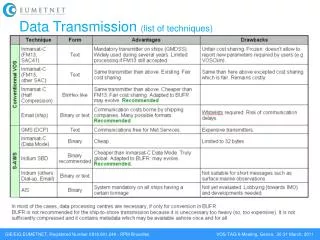
This document provides a comprehensive overview of various data transmission techniques employed in meteorological applications, including Iridium Short Burst Data and AWS-based systems. It covers the functionalities of different buoy systems like SURFMAR and Inmarsat, along with the specifics of data reporting methods such as TurboWin and GTS. The text also discusses data processing standards like FM13 and FM18, along with metadata management, fault databases, and quality control measures. This resource aims to facilitate understanding of meteorological data handling and transmission.


Overview of Data Transmission Techniques for Meteorological Applications
E N D
Presentation Transcript
Iridium Short Burst Data Short Burst Data Baros AWS E SURFMAR drifting buoys SAC41 - Inmarsat Batos AWS Data Reporting or Half Compressed TurboWin Email TurboWin GTS GTS GTS Data Processing FM13, FM18, BUFR… FM13, FM18, BUFR… databank Centre Format description Fault database corrections models QC QC Raw data Station metadata databank database (e.g. Pub 47) Data Transmission (Meteo-France exemple)