Optimization of Multiple Quality Characteristics Using Desirability Function
This document explores advanced tools in quality engineering, focusing on optimizing multiple quality characteristics using the desirability function approach. By evaluating response values for different quality characteristics, such as abrasion index and hardness, the method seeks to identify the optimal operating conditions. Key concepts included are Nominal-the-best (NTB), Smaller-the-better (STB), and Larger-the-better (LTB) characteristics. Factors like hydrated silica level and silane coupling agent level are also examined, leading to improved product quality and performance.


Optimization of Multiple Quality Characteristics Using Desirability Function
E N D
Presentation Transcript
Advanced Tools of Quality Engineering Optimization of Multiple Quality Characteristics Using Desirability Function
The desirability approach The method finds operating conditions X that provide the "most desirable" response values • Xi - Quality characteristics • Yi(x) - Response values for Xi • di(Yi) - Desirability of response Yi(Xi) • D – Overall desirability achieved
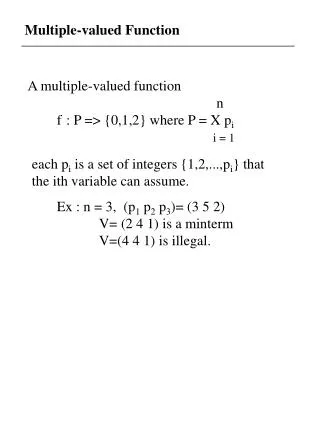
The desirability approach • Nominal-the-best (NTB)
The desirability approach • Smaller-the-better (STB)
The desirability approach • Larger-the-better (LTB)
Example • The controllable factors : • X1 - Hydrated silica level • X2 - Silane coupling agent level • X3 - sulfur level. • The responses to be optimized : • Y1 - PICO Abrasion index (120 < Y1 ) LTB • Y2 - 200% modulus (1000 < Y2 ) LTB • Y3 - Elongation at break (400 < Y3<600) NTB • Y4 - Hardness (60 < Y4 < 75) NTB