Download

1 / 12
120 likes | 228 Vues
In an ideal collaborative environment, supervisors cultivate confident employees who take ownership of their performance. According to Edwards Deming, 94% of the performance gap arises from processes and leadership, while only 6% is due to individual accountability. The supervisor's mindset plays a crucial role in addressing poor performance—transitioning from hoping it resolves itself to fostering problem-solving and accountability. Engaging exercises, such as the White Bead/Red Bead exercise, can demonstrate how organizational design influences outcomes, emphasizing that organizations are structured to achieve their current results.

E N D
Perspective on thePerformance Gap Jill E. Carter Carter Consulting 801/581-9910
In a Perfect World • What might a perfect “collaborative” environment look like for a supervisor and for an employee?
The Supervisor’s Role • To create competent, confident people who own their performance. • The “slinky” and systems thinking.
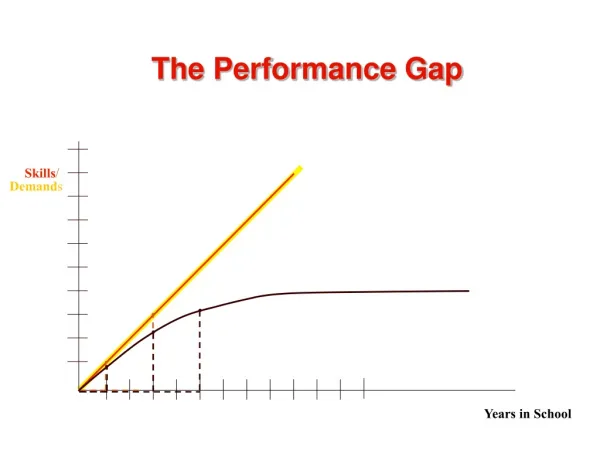
Deming and the Performance Gap • Edwards Deming* suggests • 94% of the “Performance Gap” is a function of: • Process • Leadership • 6% is employee-based (individual will/accountability) *Aguayo, Rafael. Dr. Deming, What Every U.S. Business Person Should Know About Successful Management and Bringing Quality Back Home. First Fireside Edition, Carol Publishing Company, New York, New York, 1991.
A Supervisor’s Response • To Poor Performance • First time: Hope the performance will go away • Second time: Get angry because the performance expectations are still not met • Third time: Transfer ownership of the problem to the will/attitude of the employee • What is the Supervisors “frame of mind”? • Anger and Dread? • Problem Solving and Accountability
White Bead/Red Bead Exercise Let’s try it!
White Bead/Red Bead Exercise How did the employees respond during this exercise?
Basic Truth “Organizations are perfectly designed to get exactly what they are getting.” --Vivian Harrington, Student WSU
“People do the best they can do or else they would do better.”