Exploring the Cheery Dung Beetle Theory: Nursing Leadership and Hospital Culture
110 likes | 231 Vues
This article by Heather Clark, RN, BSN, delves into the Cheery Dung Beetle Theory as it applies to nursing leadership and hospital culture. It examines the impact of cliques, constraints, and allegiances within healthcare environments, raising questions about ownership and career satisfaction. Through personal reflections and potential applications within the workforce, the article prompts readers to consider their attitudes towards their hospital and the benefits of sharing innovative theories. Discover insights on how theory can enhance practice and foster a positive healthcare culture.


Exploring the Cheery Dung Beetle Theory: Nursing Leadership and Hospital Culture
E N D
Presentation Transcript
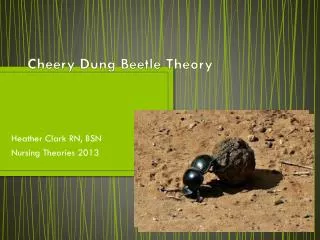
Cheery Dung Beetle Theory Heather Clark RN, BSN Nursing Theories 2013
Model Leadership Cliques Constraints Ownership Hospital Culture Allegiances
When & Where? • Pt story. • Splits Interesting. . .
Practice/Teach/Lead? • Book • Article or two • Never Really Cared. . . Just doing my job.
How can it be used? • UMC Heard about it Where I work . . . Possible?
Any Benefits. . . Maybe. . . • Where useful? • What benefits? • Who benefits?
Possibilities? Where am I going with this?
References • https://sn2prd0102.outlook.com/owa/redir.aspx?C=E20t1JHvW0O83QoWKQCDI1xf9_AA488I1pDZaGrk4CImF4CagLgK7jXQ2jTShcMEx_HAxqzmw2g.&URL=http%3a%2f%2fintqhc.oxfordjournals.org%2fcontent%2f15%2f2%2f111.full