
Analyzing George Herbert's "The Answer from The Temple" (1633)
This analysis explores George Herbert's poem "The Answer from The Temple," focusing on its rhyme scheme, meter, syllable count per line, and the identification of stressed and unstressed syllables. We will also examine the metaphors, similes, assonance, alliteration, and irony present in the work. Through careful consideration of Herbert's use of imagery and sound devices, we gain deeper insights into the themes of transience, emotional struggle, and spiritual inquiry that permeate his poetry.

Analyzing George Herbert's "The Answer from The Temple" (1633)
E N D
Presentation Transcript
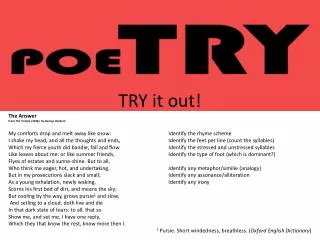
TRY it out! The Answer from The Temple (1633), by George Herbert: My comforts drop and melt away like snow: Identify the rhyme scheme I shake my head, and all the thoughts and ends, Identify the feet per line (count the syllables) Which my fierce youth did bandie, fall and flow Identify the stressed and unstressed syllables Like leaves about me: or like summer friends, Identify the type of foot (which is dominant?) Flyes of estates and sunne-shine. But to all, Who think me eager, hot, and undertaking, Identify any metaphor/similie (analogy) But in my prosecutions slack and small; Identify any assonance/alliteration As a young exhalation, newly waking, Identify any irony Scorns his first bed of dirt, and means the sky; But cooling by the way, grows pursie1 and slow, And setling to a cloud, doth live and die In that dark state of tears: to all, that so Show me, and set me, I have one reply, Which they that know the rest, know more then I. 1 Pursie. Short windedness, breathless. (Oxford English Dictionary)