
Progressivism Review
E N D
Presentation Transcript
Reform • Change for the better
“Gilded Age” • On the outside everything looked great, but underneath things were rotten
Tammany Hall • “Political Machine” in New York City
Rockefeller • Dominated the oil industry • Practiced horizontal integration
Carnegie • Pioneered vertical integration • Extremely wealthy by age 40 • Donated $350 million by the time he died
Social Darwinism • Suggested that wealthy people had superior wisdom and were the “fittest” members of society
Gustavus Swift • Invented the refrigerated rail car
Upton Sinclair • Wrote The Jungle based on close observations of how meat packers lived
Trusts • Lower retail prices • Availability of items that were once luxuries • Development and use of new machinery
Vertical Integration • Controlling all aspects of an industry • Used by Carnegie
Progressives • Ida Tarbell- anti- Rockefeller and Standard oil company • Uptn Sinclair- author • Ida B. Wells- anti-lynching • Lester Ward- thought science should be used to improve the human condition
Political Reforms • Initiative • Recall • Referendum
Politicians • Could stay in power by doing favors for people
Immigrants • Settled in U.S. cities for JOBS
Positives of Cities • Jobs • Electricity • Indoor plumbing
Education • Laws were passed requiring children to attend school • Illiteracy rates declined
Immigrant Challenges • U.S. cities with- • Gambling • Robbery • Political Corruption
Problems of Cities • Waste disposal problems • Slum Housing • Crime
Monopolies • Attempted to control the market by eliminating competition
Progressive Reformers • Wanted to give voters more direct say in lawmaking
Robber Barons • Negative nickname given to men like Rockefeller and Carnegie
Captains of Industry • Positive nickname given to men like Rockefeller and Carnegie
New Immigrants • Wave that came over around 1900 • Mainly from Italy, Greece, Russia, and other areas of Southern and Eastern Europe
New Immigrants • More likely to be • Illiterate • Poor • Catholic or non-Protestant
Theodore Roosevelt • Became famous as a Rough Rider on San Juan Hill • Western Rancher • Asthmatic • Became President when McKinley was assassinated
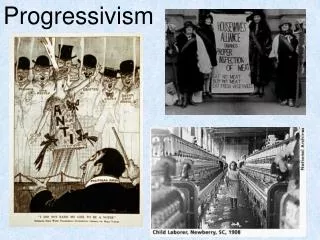
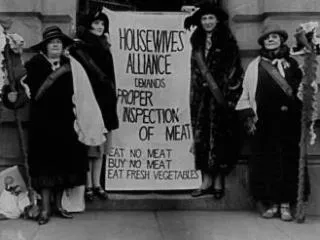
Roosevelt’s Accomplishments • Meat Inspection Act of 1906 • Increased number of national parks • Arbitrated the United Mine Workers Strike
Woodrow Wilson • Due to the Republican split, won the election of 1912 in an electoral landslide
Wilson • Allowed press conferences • Supported the Underwood Tariff reduction bill • Program was known as “New Freedom”
1912 Election • Woodrow Wilson- Democrat • William Howard Taft- Republican • Teddy Roosevelt- Progressive
W.E.B. Du Bois • Felt blacks should receive equality immediately
Federal Trade Commission • Established to stop unfair business practices among companies • Supported by Wilson
Underwood Tariff • Established to reduce the tariff • High tariffs had been protecting American business
Jane Addams • Wealthy woman that moved to Chicago and built Hull House to help the poor
Alcohol • Viewed as a cause of violence against women
17th Amendment • Direct election of senators
Carry Nation • Strongly against alcohol • Would scold and intimidate saloon patrons with a hatchet
Walter Rauschenbusch • Religious leader during the Progressive era • Thought Christians should better their communities by helping others
Robert La Follette • Wisconsin Governor responsible for a great deal of reform legislation
Accommodation • Idea that economic success for blacks was more important than racial equality
Mary Ritter Beard • Wrote about the contributions of women in history
Muckrakers • Writers whose articles attacked problems in the U.S.
19th amendment • Gave women the right to vote
Suffrage • The right to vote
Seneca Falls • Site of Women’s Rights conference in 1848
Leon Czolgosz • Assassinated President McKinley
Immigrant • Person entering a country to live there
Margaret Sanger • Spoke to women about preventing pregnancy
Eugene V. Debs • Socialists candidate in 1912 presidential election
Urbanization • Growth of cities