Download
1 / 7
70 likes | 189 Vues
This initiative by Western Suffolk BOCES aims to maximize the educational experience for students unable to attend school due to illness through innovative technology solutions. Homebound instruction is vital, as students often face educational setbacks and limited social interaction. Utilizing remote tools like interactive robotics, students can engage in real-time class activities from home. The program supports a seamless connection to classroom instruction and promotes social interaction, ultimately reducing isolation and enhancing academic achievement.

E N D
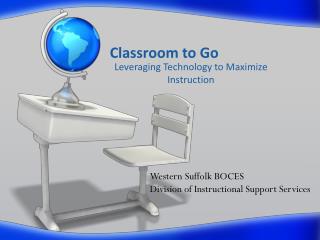
Classroom to Go Leveraging Technology to Maximize Instruction Western Suffolk BOCES Division of Instructional Support Services
Homebound Instruction • Students unable to attend school due to physical, mental or emotional illness or injury for more than two weeks must receive instruction • Elementary instruction = minimum of five hours/week or one hour/day • Secondary instruction = minimum of ten hours/week or two hours/day • Impact of homebound instruction on student • Limited educational exposure • Student often falls behind academically • Limited social interaction • Separation from school culture
Homebound Instruction • Impact of homebound instruction on school • Contract with qualified outside provider (tutor) • Instructional rigor may not be consistent with classroom • Reduced instructional time • Costs, examples: • Average $50 to 80/hour for tutor • Babylon = approx. 10 – 15 students/year, cost = $25,000 • Northport = approx. 100 students/year, cost = $185,000 • Lindenhurst = approx. 80 students/year, cost = $340,000 • South Huntington = approx. 24 students/year, cost = $164,000
Instructional Technology Technology Readiness Internet Connectivity Wireless capacity • Connection to the internet • Redundancy • Bandwidth • Connection anywhere in the school
Creative Alternatives What technology can do differently. • Using internet & wireless school technology, interactive robotics brings homebound student to school. • Student connects to school from home • Student controls the robot to participate in class real-time
WSB Pilot • Collaboration between our instructional technology, model schools and distance learning programs • WSB will purchase one system for approximately $7000 • Selected districts will each use the system for one month • WSB will provide technical support, training, and collect data to determine the future uses • Expectations: • Low cost alternative or supplement for homebound instruction • Increased student learning, achievement and social connection • Continue as a shared service between districts • Other program uses include: • virtual field trips • video conferencing
Introducing VGo In the Classroom • http://www.youtube.com/watch?v=F9VcCslj8-w Let’s meet VGo