Chieftain Biofuels Biodiesel Blending Process
10 likes | 130 Vues
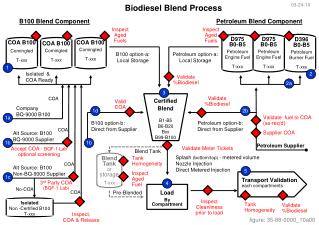
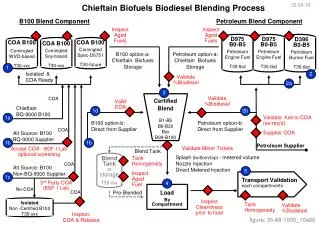
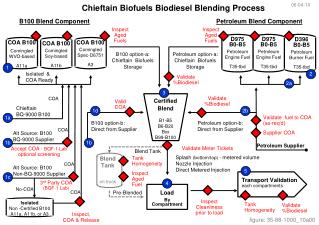
This guide outlines the biodiesel blending process for Chieftain Biofuels, focusing on the components involved in creating blends like B100 and various Bxx grades. It highlights the importance of inspecting aged fuels, validating Certificate of Analysis (COA) for different sources, and ensuring tank homogeneity. Special attention is given to COA for soy-based and WVO-based biodiesel. Furthermore, it details procedures for using biodiesel in petroleum engine fuels and burner fuels while adhering to standards like BQ-9000 and maintaining fuel quality.


Chieftain Biofuels Biodiesel Blending Process
E N D
Presentation Transcript
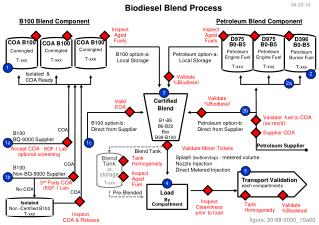
06-04-10 Chieftain Biofuels Biodiesel Blending Process B100 Blend Component Petroleum Blend Component Inspect Aged Fuels Inspect Aged Fuels D975 B0-B5 Petroleum Engine Fuel T35-tbd D975 B0-B5 Petroleum Engine Fuel T35-tbd D396 B0-B5 Petroleum Burner Fuel T35-tbd COA B100 Comingled WVO-based A11a COA B100 Comingled Spec-D6751 A3 COA B100 Comingled Soy-based A11b B100 option-a: Chieftain Biofuels Storage Petroleum option-a: Chieftain Biofuels Storage 1 2 5 1d 2b 2a 1b 1a 1b 1c 4 3 Isolated & COA Ready Validate %Biodiesel COA Validate %Biodiesel Valid COA Certified Blend B1-B5 B6-B20 Bxx B99-B100 Chieftain BQ-9000 B100 Validate fuel to COA (as-req’d) B100 option-b: Direct from Supplier Petroleum option-b: Direct from Supplier COA Alt Source: B100 BQ-9000 Supplier Supplier COA Petroleum Supplier Validate Meter Tickets Accept COA - BQF-1 Lab optional screening Blend Tank Splash (bottom/top) - metered volume Nozzle Injection Direct Metered Injection Blend Tank on truck Tank Homogeneity COA Alt Source: B100 Non-BQ-9000 Supplier Inspect Aged Fuel 3rd Party COA (BQF-1 Lab) Transport Validation each compartments No-COA COA Pre-Blended Load By Compartment Inspect Cleanliness prior to load Isolated Non -Certified B100 A11a, A11b, or A3 Tank Homogeneity Validate %Biodiesel Inspect, COA & Release figure: 35-88-1000_10a00