Impact of Human Activities on Watershed Dynamics and Aquatic Ecosystems
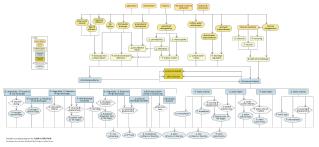
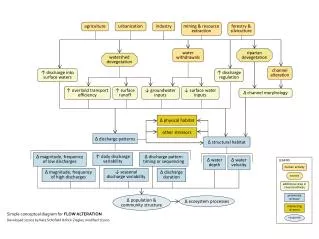
This study explores the complex interactions between human activities—such as urbanization, mining, and agriculture—and their effects on watershed health and aquatic ecosystems. It examines factors like groundwater inputs, surface water inputs, and discharge regulation, analyzing how alterations in these areas lead to changes in channel morphology, habitat structure, and the overall ecological balance. The findings aim to inform sustainable management practices to mitigate impacts on biodiversity and ecosystem processes.

Impact of Human Activities on Watershed Dynamics and Aquatic Ecosystems
E N D
Presentation Transcript
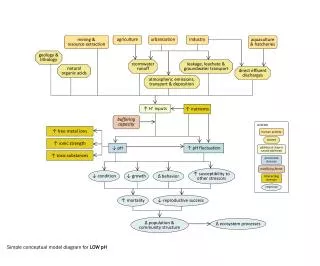
agriculture urbanization industry watershed devegetation riparian devegetation forestry & silviculture mining & resource extraction water withdrawals human activity ↓ groundwater inputs ↓ surface water inputs channel alteration ↑ overland transport efficiency ↑ surface runoff ↑ discharge regulation ↑ discharge into surface waters Δ channel morphology additional step in causal pathway source Δ physical habitat Δ structural habitat LEGEND other stressors Δ discharge patterns Δ water depth Δ water velocity Δ magnitude, frequency of low discharges ↑ daily discharge variability Δ discharge pattern timing or sequencing proximate stressor Δ magnitude, frequency of high discharges ↓ seasonal discharge variability Δ discharge duration interacting stressor Simple conceptual diagram for FLOW ALTERATION Developed 7/2007 by Kate Schofield & Rick Ziegler; modified 7/2010 response ∆ ecosystem processes ∆ population & community structure