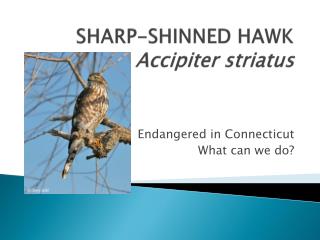
SHARP-SHINNED HAWK Accipiter striatus
80 likes | 210 Vues
The Sharp-shinned Hawk (Accipiter striatus) is an endangered species in Connecticut, primarily found in coniferous and mixed woodlands. These hawks play a crucial role in controlling pest populations, including starlings and sparrows, while contributing to the ecosystem's balance. Their numbers have declined due to habitat loss, pesticide use, and environmental contaminants. This guide explores their habitat, sightings in Connecticut, ecological benefits, and ways we can help protect them, such as supporting conservation efforts and avoiding pesticides.


SHARP-SHINNED HAWK Accipiter striatus
E N D
Presentation Transcript
SHARP-SHINNED HAWKAccipiter striatus Endangered in Connecticut What can we do?
The questions I focused on: • What is their natural habitat? • Where and when are they usually seen in Connecticut? • In what ways are they a benefit to us in the state? • Why are they endangered? • What can we do to help?
What is their natural habitat? • Sharp-shinned Hawks live in coniferous or mixed woodlands. • During winter, they are often found in woodlots, towns, and parks. • Sharp-shinned hawks are found throughout most of North America, from Alaska and Canada south to the Gulf States.
Where and when are they usually seen in Connecticut? • The sharp-shinned hawk migrates through Connecticut from the end of the summer until early November. • Some birds stay in Connecticut over the winter. • Connecticut range map (where they are most often sighted in the state)
In what ways are they a benefit to us in the state? • They reduce smaller pest species such as European starlings and House Sparrows. • They also occasionally eat mice, shrews, bats, frogs and insects. • They are an important food source for their predators and an important member of their ecosystem.
Why are they endangered? • Sharp-shinned hawk populations declined in the 1970s because of eggshell thinning caused by pesticide contaminating their prey. • Conservation concerns today include declines in prey species, environmental contaminants and the reduction of their forest habitat. • Collisions with plate glass doors and picture windows
What can we do to help? • Support conservation of larger wooded areas in the state so they are not developed. • Don’t use any pesticides, and discourage others from using pesticides, that can cause thinning of eggshells. • Draw shades or curtains to help minimize bird/glass impacts. • Report nest sightings to the CT Department of Environmental Protection (CT DEP).