Understanding Characterization: Types, Development, and Analysis in Literature
This guide explores the elements of characterization in literature, distinguishing between major (protagonists and antagonists) and minor characters, and examining their roles. It delves into static vs. dynamic and flat vs. round character classifications, highlighting how characters can change and develop throughout a narrative. Additionally, the guide covers types of characterization, including general, direct, and indirect methods. Key questions are posed to aid in analyzing character complexity and consistency, offering a framework for deeper literary analysis.

Understanding Characterization: Types, Development, and Analysis in Literature
E N D
Presentation Transcript
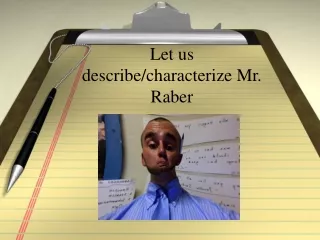
CHARACTERIZATIONMr. Raber “Types of Characters”
Major Characters: • The PROTAGONIST is the main character • Action is focused around the protag. • The ANTAGONIST is also a major character • He or she is AGAINST the protagonist
Minor Characters: • Play subordinate roles • Vary in degree of importance
STATIC vs. DYNAMIC Characters: • STATIC CHARACTERS change very little • DYNAMIC CHARACTERS change as a direct result of events - Changes can be subtle or dramatic Both vary in degree of change
FLAT vs. ROUNDCharacters: • ROUND CHARACTERS are complex -Cannot be summarized briefly • FLATCHARACTERS are basic -Can be summed up with a single word or phrase -Characterized with a single dominant trait
Other Characters: • STOCK CHARACTER- a recognizable stereotypical character • CARICATURE- an extreme exaggeration of one or several human characteristics
Types of Characterization: • GENERAL • DIRECT • INDIRECT
1) General Characterization: • Includes the ways the author communicates natures of characters • Can include both DIRECT and INDIRECT characterization
2) DIRECT CHARACTERIZATION: • Includes characters’ backgrounds, motives and personalities • Includes direct description of appearance • Also includes the narrator’s opinion- which could be biased
3) INDIRECT CHARACTERIZATION: • Defines characters through their actions and statements • Includes dialect, plot, and dialogue
Questions to Ask When Analyzing Characters: • Does the character grow or deteriorate? Why or why not? (Static vs. Dynamic) • How complex is the character? (Flat vs. Round) • How important are the minor characters?
Other Questions to Ask When Analyzing Characters: • Are the characters words and actions consistent? (Direct and Indirect) • Is the character: intelligent, likeable, insightful, responsible, happy, believable? How do you know?
ANY QUESTIONS?