Visualization of Melting Diffraction Lines in Tin Sample Using X-Ray Diffraction Techniques
This experiment aims to visualize diffraction lines of a tin sample as it undergoes melting. The tin sample is heated using an external heater, monitored with a thermocouple to prevent overheating. Observations are recorded at 40 frames per second with an x2 ADC gain and 30V bias voltage. The Xystage allows for precise scanning of the sample area. Notably, as the temperature approaches approximately 200°C, diffraction lines begin to shift and eventually disappear, indicating the melting process. This provides valuable insights into the physical changes during melting.


Visualization of Melting Diffraction Lines in Tin Sample Using X-Ray Diffraction Techniques
E N D
Presentation Transcript
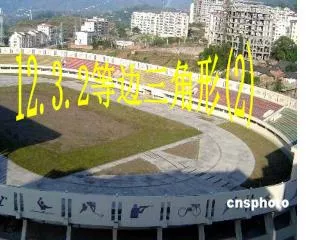
12.3.2Tin sample Nobumichi Tamura, Martin Kunz, Kai Chen, Rich S. Celestre, DionisioDoering, Tae Sung Kim, Peter Denes, PatricGruber, Andy Minor, Daniel Kiener
FCCD proff of principle experiment • Objective • Visualize some difraction lines of a Tin sample as they melt. • The sample will be heated using an external reater with a termocouple to monitore the temperature. • The difraction line was chosen at random. • The observation will be done at 40 fps on x2 adc gain and 30V bias voltage.
Installing the FCCD • FCCD • Sample • Xray output
Setup • Solder joints of tin were place on to of a heater.
Movie Area Scan • The Xystage was used to perform an inspection of the sample. The X axis was moved form minus to plus its limits and then a stem on the y direction was done
Movie line scan • In this case the sample was positioned in such way that the beam crossed one very active area (several difraction lines) and was scanned once.
Melting • The heater controller was installed in side the hutch. This means that every step to increase the temperature had to be done with the beam line off and someone needed to go inside the hutch. • The temperature was monitored using a termocouple which means that the reading temperatures was +/- a few degrees different from the sample. • At about 2XX C we observed the lines starting to move and sudenly desapear. • Afer examining the sample it showed clear evidence of melting.