Download
1 / 15
150 likes | 254 Vues
This document outlines a comprehensive approach to improving shopping precincts, emphasizing their role as vital community hubs. Presented at the Thriving Neighbourhoods Conference in October 2013 by David Vial and Michelle Prior, the program aims to align urban planning with user needs and enhance streetscape management. Key objectives include understanding user opinions, increasing satisfaction with facilities, and encouraging healthy, vibrant public spaces. Insights derived from user data reveal trends in visitation patterns, transport choices, and areas for improvement, aiding in the creation of more appealing and functional shopping environments.

E N D
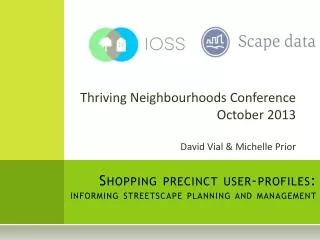
Shopping precinct user-profiles: informing streetscape planning and management Thriving Neighbourhoods Conference October 2013 David Vial & Michelle Prior
Shopping precinct user-profiles • Outline • Introduction • Program Objectives • Data Collection • Findings & Insights
Introduction Shopping precincts: • Essential community places • Focal point for local communities • Localities provide a unique signature • Conflicting uses – pedestrians, cyclists, motorists, types of shops • Capital & recurrent spending by LGA
Program Objectives • Align planning & expenditure with user requirements • Gain an understanding of users opinions about shopping precincts • Inform streetscape planning and management decision making • Contribute to the creation of healthy & vibrant places
Streetscape Focus Area Outdoor precincts – Shopping strips • Retail • Commercial • Hospitality • Professional services • Community facilities • Increasingly mixed use: residential
Findings & InsightsFrequency of Visit Majority visit daily or a few days per week - Ready location for place making
Findings & InsightsLength of Stay Length of stay is longer in larger shopping precincts – more variety
Findings & InsightsReasons for Visiting Group segmentation possibility for further analysis of a larger data base Note: Multiple Response Question
Findings & InsightsMedian Distance & Time Median distance for non-motorised is 500 metres travelling distance – not as the crow flies * Small sample size
Findings & InsightsChoice of transport Mode Distance & convenience often motivate the choice of transport mode Note: Multiple Response Question
Findings & InsightsTransport Mode Transport modes vary with age
Findings & InsightsWalkability Multifaceted factors affect walkability
Findings & InsightsImportance / Satisfaction Provision Vehicle parking & bin provision have highest gap between importance & satisfaction The higher the negative the greater the dissatisfaction to importance
Findings & InsightsImportance / Satisfaction Maintenance Footpath, toilet maintenance& rubbish removal are priorities The higher the negative the greater the dissatisfaction to importance
Findings & InsightsEnhancements Comments provide a richness and powerful insight into creating better shopping precincts