Enhancing Road Safety Decisions through Data: Insights from Barbara Harsha
This presentation by Barbara Harsha, delivered on behalf of the Governors Highway Safety Association, emphasizes the importance of data in state highway safety planning. It covers the various types of data used, including crash statistics, citation information, EMS reports, and seat belt usage. By analyzing this data, State Highway Safety Offices can identify key problems, set goals, allocate resources, and track progress. The presentation also discusses the integration of crash and crime data to optimize resource use for improved roadway safety outcomes.

Enhancing Road Safety Decisions through Data: Insights from Barbara Harsha
E N D
Presentation Transcript
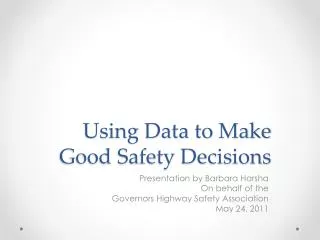
Using Data to Make Good Safety Decisions Presentation by Barbara Harsha On behalf of the Governors Highway Safety Association May 24, 2011
Data Collection • State Highway Safety Offices (SHSO) use a variety of data in their planning processes • Crash (both state and local and FARS) • Citation (if available) • EMS (if available) • Location data • Crime data (DDACTS) • Seat belt usage • Attitude survey • Some federal guidelines for these data (MMUCC, NEMSIS, MIRE) • All states have automated data collection to some extent
Data Analysis • SHSOs use crash and related data to drive their programs: • Identify leading highway safety problems in their states • Set short-term goals • Select countermeasures • Allocate resources • Track progress in reaching established goals • Seat belt usage data is used to determine where to conduct high visibility enforcement • Attitudes survey data is used to shape media and public education campaigns • States beginning to link crash and crime data as a way to target and better utilize motor vehicle and criminal justice resources