The Gilded Age: Coined by Mark Twain and its Implications (1870s-1890s)
Chapter 23 of "The Gilded Age" delves into the term coined by Mark Twain to describe the era characterized by rampant corruption and ineptitude in American politics. This period marked the end of Reconstruction and the rise of big business, highlighted by the election of 1868 where Ulysses S. Grant, a Republican, defeated Democrat Horatio Seymour amidst the "Waving the Bloody Shirt" campaign. Important issues were often overlooked, leading to a landscape filled with forgettable presidents and significant social and economic challenges.

The Gilded Age: Coined by Mark Twain and its Implications (1870s-1890s)
E N D
Presentation Transcript
The Gilded Age Chapter 23
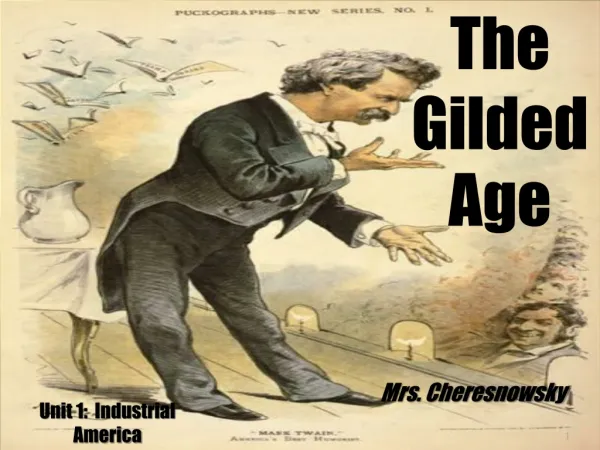
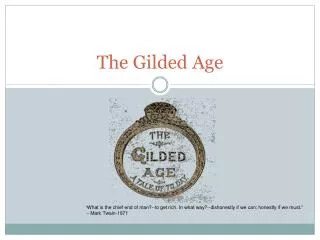
Gilded Age Coined by Mark Twain Criticized D.C. and leading figures
Characteristics 1870s-1890s Marked by corruption and ineptitude “The forgettable” presidents Important issues ignored initially Marked end of Reconstruction Rise of big business
Election of 1868 General Grant (rep.) elected over Horatio Seymour (dem.) “Waving the Bloody Shirt”