Download
1 / 8
80 likes | 234 Vues
Marine worms are diverse creatures with distinct characteristics that span various phyla. Common traits among these worms include bilateral symmetry, hydrostatic skeletons, and a complete digestive system in many cases. Notable phyla include Platyhelminthes (flatworms), Nemertea (ribbon worms), Nematoda (roundworms), and Annelida (segmented worms). Each phylum exhibits unique features, such as the complex structures of annelids and the parasitic nature of some flatworms. Understanding these marine worms enhances our knowledge of marine ecosystems and their roles within them.

E N D
Common Characteristics of All Worm Phyla • Hydrostatic skeleton • Bilateral symmetry
Phylum Platyhelminthes - Flatworms • Dorsoventrally flattened – flat backs and bellies • Have real organs and organ systems • Ladderlike nerve cord with a simple brain • Saclike digestive system (only one opening) • 15,000 species • Turbellarians – mostly free swimming carnivores • Flukes (trematodes) – all are parasites • Tapeworms (cestodes) – parasites with long segmented bodies
Phylum Nemertea – Ribbon Worms • Long flattened bodies • Complete digestive tract (separate mouth and anus) • Circulatory system with blood • Proboscis – long fleshy tube used to entangle prey • 900 species, mostly marine
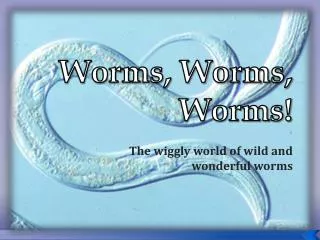
Phylum Nematoda - Roundworms • Common in sediments or as parasites • Cylindrical body typically pointed at both ends • Complete digestive tract • 10,000-15,000 species but many could yet to be discovered
Phylum Annelida – Segmented worms • 13,000 species • Complete digestive tract • Efficient crawlers and burrowers • Closed circulatory system – blood always remains in blood vessels (arteries, veins, capillaries) • Class Polychaeta • On each segment they have a pair of parapodia and setae (bristles) • Gills for respiration • 6000 species almost entirely marine
4 to 10 cm in length • Deposit or suspension feeders • Some are tube dwelling • Class Hirudinea – Leeches • Mostly freshwater • Suckers at each end • No parapodia
Other Marine Worms • Phylum Sipuncula – Peanut worms • Peanut shaped, deposit feeders • Phylum Echiura • Sausage shape, buried in mud • Phylum Pogonophora – Beard Worms • Lack a digestive system, symbiotic relationship with bacteria for obtaining nutrients • Vestimentiferans found at hydrothermal vents • Phylum Chaetognatha – Arrow Worms • 60 species, but common in plankton, fishlike body, voracious carnivores