Download
1 / 13
130 likes | 233 Vues
This article discusses the importance of prioritizing health in post-conflict settings and the implications of linking health to broader issues like peace-building and development. It explores the ethical considerations, securitization, and politicization of healthcare, highlighting the need for health professionals to be vigilant about potential political exploitation of health services. The text raises questions about the role of health professionals in promoting the "health for health" ethic and calls for a framework to guide ethical practices in utilizing health for social and political purposes.

E N D
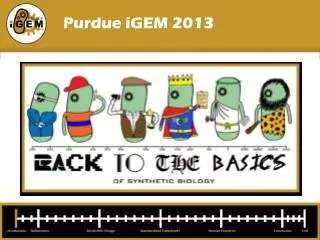
Back to Basics: ‘Health for Health’ Egbert Sondorp Conflict and Health Programme London School of Hygiene and Tropical Medicine
Zimbabwe Cholera outbreak2008/9 Assisting people or the government ?
HumanitarianPrinciples • Humanity • Impartiality • Neutrality • Independence
‘Back to Basics’ • Vol 23, #2, p 93 - 114 • Published Online: 16 Dec 2002 Depolarising the 'Broadened' and 'Back-to-basics' Relief Models Stephen Jackson & Peter Walker
From the abstract • Prompted by the calls in recent years to link relief practice to peace-building, development, or both, several conferences and papers have recently mounted a strong critique, seeing these 'broadenings' of relief as 'eroding' or 'corrupting' core humanitarian principles and playing into neo-isolationist agendas to slash humanitarianism.
L’histoire se repete ? • At least that is what I hope: • A debate around the role of health in ‘post-humanitarian settings’, in particular in countries struggling to emerge from conflict • Calls in recent years to link health not only to peace-building and development, but to a range of other issues
Calls to link health with: • Stabilisation • Winning hearts and minds • 3D approach (defense, development, diplomacy) • Legitimisation of new government • Delivering peace-dividend • Peace building • Development (the health MDGs) • State building
Afghan Doctors, PRT Make Huge House Call in Shewan • U.S. Navy Cmdr. Harvey Wilds, the commander of the Farah Provincial Reconstruction Team medical team, observes local Farah Hospital staff member Noori Zalmai as he makes a diagnosis of chicken pox for Guldasta, age nine, and Gulrawza, age eight, sisters who were brought in a wheel barrel by their older brother to the Village Medical Outreach Program, held Dec. 13, 2009, in Shewan, Afghanistan. Zalmai is one of six medical personnel from Farah Hospital who were transported by the PRT to Shewan ISAF Website
ODI – policy brief HPG Policy brief 38, Oct 2009. Untangling early recovery
Health Professionals ’discomfort’ • ‘Health for Health’ ethic • Securitisation and politicisation of health care • Is this increasingly driving international funds for investments in health ? • Are we becoming soldiers?
From interview with minister of public health in Afghanistan • “I do believe that health is at the centre of [the] social-economic development of Afghanistan. • Health is a bridge to peace. Health is a corridor for tranquillity... Even the enemies, you know, receive the health services in our facilities. That is why our facilities are there and deliver health services. • So that is why we can promote peace; we can convince the ones that are confused to take the side of the Afghan government”
Questions • Should health professionals be more aware of this potential ‘use’ of health for political purposes? • Should we develop a framework (principles) that would help assess a situation and provide guidance? • Should health professionals be more active in pursuing ‘health for health’?