Understanding Invertebrates: Echinoderms, Arthropods, Annelids, Cnidarians, and Sponges
This comprehensive overview explores various invertebrates, including echinoderms like sea cucumbers, arthropods such as dung beetles, annelids like earthworms, cnidarians including jellyfish, and poriferans exemplified by the Venus flower basket sponge. Each group is defined by its unique anatomy and reproductive methods, such as external fertilization and filtration feeding. Discover their habitats, diets, and environmental challenges they face from predators and pollution, as well as fascinating adaptations that enable their survival.

Understanding Invertebrates: Echinoderms, Arthropods, Annelids, Cnidarians, and Sponges
E N D
Presentation Transcript
Invertebrates By: Harley Rollins & Molly Galant
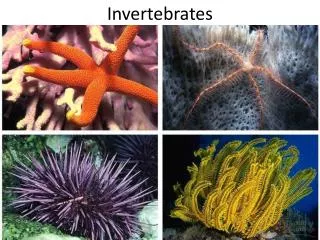
EchinodermSea Cucumber • Definition: An invertebrate that has an internal Skeleton and spines that are a part of its skin. • Body System: Skeleton, Spinney, on outside they get oxygen from sea water. • Reproduction: They lay eggs that turn into larvae and swim away. • Food: Things they sift through the water. • Habitat: Ocean under the sea. • Predatorsand Problems: Octopi, and people eat them. • Adaptions & fun facts: Spines help protect them from predators. H.R
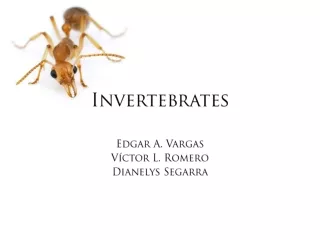
Arthropodsex: Dung Beetles MG • Definition- An animal that has a jointed exoskeleton and jointed limes • Body Systems-Dung Beetles have a hole they eat and it comes out the other hole • Reproduction-The male and female mate and the female lays eggs and larvae live inside brood bolts and eat the ball to the inside out • Food- Dung beetles eat poop. Dung beetles also suck flies blood. • Habitat-They brow in poop they move poop into their nest and make a tunnel to the outside. • Predators& Problems- Dung beetles seal other dung beetles poop and kills the eggs on it and lays their own eggs on it they are called kleptoparasites. • Adaptations Fun Facts-Dung beetles live and eat poop. Larvae takes weeks to five months to change into a pupae don’t walk or eat until their adult.
Annelids/Earth worms MG • Definition/Description- An animal , such as the earth worm who body is made up of connected section. • Body Systems- Erath worms have a circulatory system and they have 5 hearts. • Reproduction- After male and female have mated they both lay eggs and make slimy cocoon protection the eggs. • Food- They feed on dead plants. • Habitat- They burrow under ground • Predators Problems- Snakes , brides ,moles , chipmunks ,rats , skunks, raccoons, #s of insects. • Adaptations Fun Facts-They breath trough their skin.
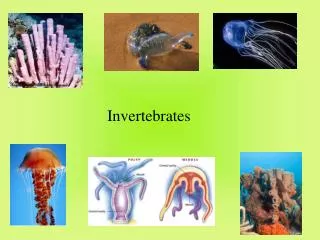
Cnidarian/ jellyfish MG • Definition- An animal with tentacles that have the ability to stein it prey . • Body Systems- They have radio symmetry it is arranged around the center where three mouths is, they have bow shaped body. • Reproduction – Asexual it forms medusas that will agential break off and swirl away • Food- Jelly fish eat any little fish they find • Habitat –Jelly fish swim on the surface and in water to suched for prey and they live in the down of the ocean( sometimes). • Adaptations& Fun facts- Jelly fish eat throw their mouths and their waste come out the same way.
Platyhelminthes/planarians • Definition- An animal such as a planarian that has a flatten body a digestive system without one opening and a simple nervous system. • Body Systems- They have a one opening it go to the bath room with a simple digestive system. • Reproduction- Flat worms have to mate and then they lay eggs .their body part got cut of it will grow back. • FOOD- they have a tube and they suck up small particles • Habitat- Planarian live in fresh water and streams, lakes, and ponds. • Predators- They have interval body cavity's MG
Sources page • Jelly fish wed site • Dung beetle book • Harcourt science book MG
AnnelidsEarth Worms • Definition: An animal such as the earth worms, whose body is made up of connected sections or segments. • Body System: Their bodies are formed of connected segments. • Reproduction: Worms mate then they both have eggs, fertilized eggs develop and hatch. • Food: Earth Worms feed on dead plants. • Habitat: Underground borrowing through soil. • Predators and Problems: Birds, Moles, Pollution. • Adaptions & Fun Facts: They eat food and poop dirt. H.R
Poriferal/SpongesVenus Flower Basket • Definition: A type of animal that filters the water it lives in to get its food. • Body System: No bones, arms, Legs, brain, eyes, or ears. They are a big filter. • Reproduction: A cell called archaecytes form into every cell in the sponges body to create a new sponge. • Food: It filters the water it lives into get its food. • Habitat: Fresh water mostly Oceans. • Predators and problems: Humans pluck them out of the water and dry them out and then sell them as a cleaning device. • Adaptions & Fun Facts: Warm water some are found 4 miles deep in the ocean. H.R
Cnidarian Jelly Fish • Definition: An animal with tentacles that have the ability to string its pray or predators. • Body System: 1 opening, with a circle of tentacle surrounding it. • Reproduction: Both sexually and asexually, Medusa releases the sperm and egg cell into water fertilized egg cells develop into larvae. Larvae turns into polyps. • Food: H.R
Sources H.R • Harcourt science book • Encyclopedia