The Resilience of Slave Marriages: Love Amidst Oppression
Chapter 6 explores the enduring bond of slave marriages and the cultural significance of traditions like "jumping the broom." While legal recognition was absent, these unions thrived in shared hardships. Couples often resided in small, rudimentary cabins, sometimes sharing space for better survival. Slave parents played a crucial role in teaching their children about heritage and resilience, despite facing exploitation and health challenges. This chapter highlights the richness of family life in slavery and the deep-rooted connections formed in oppressive conditions.

The Resilience of Slave Marriages: Love Amidst Oppression
E N D
Presentation Transcript
Slave LifeChapter 6 Marshaun Sherman
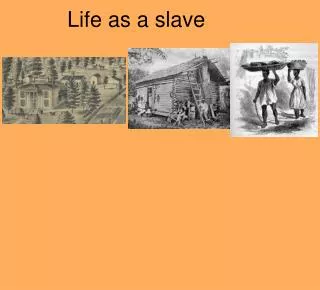
Marriage • Jumping the broom- a common part of the slave wedding ceremony. • No legal sanctions supported slave marriages but they endured anyway. Patriarchy-male dominance. • Black men usually lacked in power. Slave couples usually lived together in cabins on their master’s property. • Slave cabins were rude, small one-room dwellings that two families might have to share. • Couples who shared cabins were generally better off than husbands and wives who were the property of different masters and lived on different plantations.
Children • Slave parents were able to instruct their children in family history , religion, and the skills required to survive in slavery. • They sang to them and told them stories full of folk wisdom.
Exploitation • Exploitation was a word used for abuse usually towards the slave women. • One of the more famous antebellum (pre-Civil War) cases of exploitation occurred in Missouri during the 1850s.
Clothing • Slaves usually never had time or skill to make their own clothes and often went barefoot during the warm months and wore cheap shoes made by local cobblers in the winter. • Slaves received clothes only twice a year, and in the winter, the men received two outfits for cold weather such as: • Jackets • Wool Caps
Health • Due to the lack of health in slaves they were usually prone to a lot of health problems such as: • Dysentery • Typhus • Hepatitis • Salmonella • Typhoid fever • Sickle-cell anemia • Lactose intolerance