1 / 1

Assessing the Threat of Elephant Grass (Pennisetum purpureum) in NATL Regions

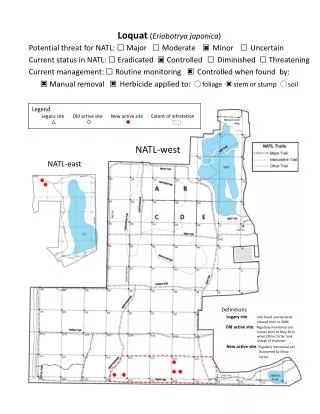
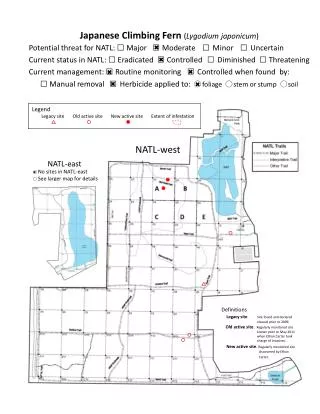
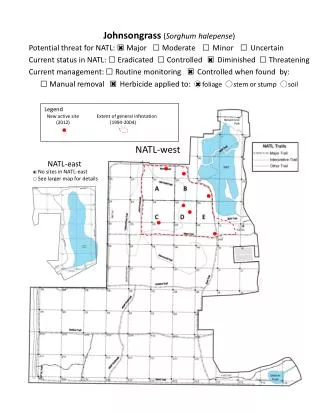
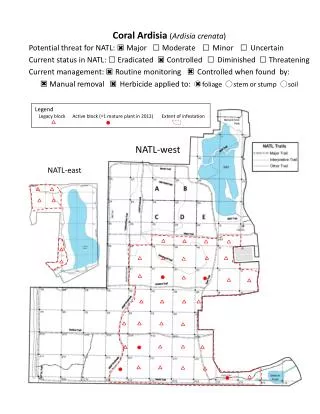
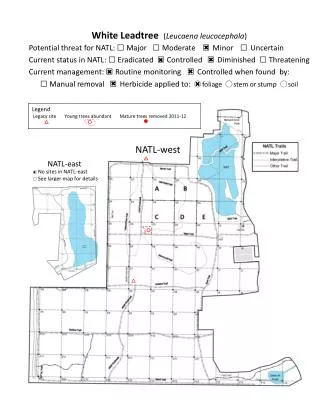
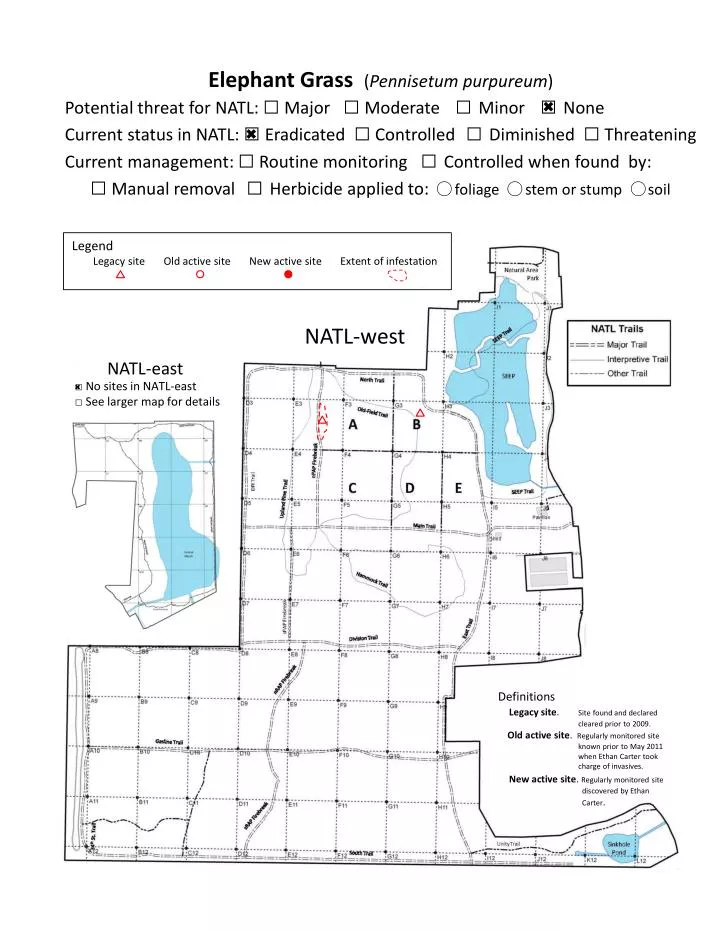
Elephant Grass (Pennisetum purpureum) presents a potential threat to NATL areas, with its current status ranging from eradicated to threatening. Management strategies include routine monitoring and various eradication methods such as manual removal and herbicide application. The extent of infestation varies across NATL-west and NATL-east, highlighting the need for ongoing surveillance and effective control measures. Historical classifications of sites into legacy, old active, and new active help track the management of this invasive species effectively.

vida
Télécharger la présentation

Assessing the Threat of Elephant Grass (Pennisetum purpureum) in NATL Regions

An Image/Link below is provided (as is) to download presentation Download Policy: Content on the Website is provided to you AS IS for your information and personal use and may not be sold / licensed / shared on other websites without getting consent from its author. Content is provided to you AS IS for your information and personal use only. Download presentation by click this link. While downloading, if for some reason you are not able to download a presentation, the publisher may have deleted the file from their server. During download, if you can't get a presentation, the file might be deleted by the publisher.

E N D

Presentation Transcript


  1. Elephant Grass (Pennisetumpurpureum) Potential threat for NATL: □ Major □ Moderate □ Minor □ NoneCurrent status in NATL: □ Eradicated □ Controlled □ Diminished □ Threatening Current management: □ Routine monitoring □ Controlled when found by: □ Manual removal □ Herbicide applied to: foliage stem or stump soil Legend Legacy site Old active site New active site Extent of infestation NATL-west NATL-east □ No sites in NATL-east □ See larger map for details Definitions Legacy site. Site found and declared cleared prior to 2009. Old active site. Regularly monitored site known prior to May 2011 when Ethan Carter took charge of invasives. New active site. Regularly monitored site discovered by Ethan Carter.
More Related