The Peoples President
120 likes | 258 Vues
Chapter 13, Section 1 explores the evolving political landscape of early 19th-century America. It illustrates the contradiction behind the phrase "all men are created equal," as political power was largely held by white male property owners. In contrast, new leaders from the west emerged, emphasizing cooperation and self-made success. As voting rights expanded for white men, marginalized groups faced increasing disenfranchisement. The chapter discusses the emergence of political parties, the contentious election of 1828, and Andrew Jackson's rise as a symbol of the common man and American democracy.


The Peoples President
E N D
Presentation Transcript
The Peoples President Chapter 13/ Section 1/ Pages 422-425
Equal? • “all men are created equal” – in fact, only a small percentage of people held political power: • White • Male • Property owners
New voices from the west: • People moving west were looking for things in their leaders that was different then ever before: • Self made leaders • Value of cooperation and hard work • When new western states wrote their constitutions, they gave suffrage (the right to vote) to all white men
Limits on the vote: • As more white men got the right to vote, African Americans in the north began to lose it. • Other people in the nation also had no voice: • Women • Native Americans • Enslaved peoples
An end to “King Caucus” • People were chosen to vote in a caucus (small private meeting where candidates are chosen) • Many people did not like this and put pressure on the government • In response the began holding nomination conventions (people from each state voted for candidates)
The Candidates: • John Quincy Adams • Henry Clay • William Crawford • Andrew Jackson
The Corrupt Bargain • No candidate in the election won the majority of the electoral votes • The House of Representatives had to choose the leader • They choose Adams • Jackson Supporters claimed this was Corrupt
Split of political parties • Democrat-republican party began to split over the results of the election: • National Republicans: • Eastern business owners • Southern Planters • Former Federalists • Democratic Party • Traces its roots to Jackson
Election of 1828: • No longer did people choose among hero's of the revolution: Jackson and Adams began to attack each other • Jackson labeled Adams an Aristocrat • Adams called Jackson a barbarian and a savage
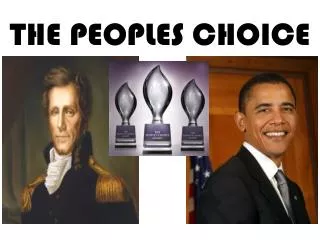
President from the West: • Jackson won by a landslide • Jacksons supporters believed he represented the common man • He became a symbol of the growing power of American democracy