Download
1 / 13
130 likes | 265 Vues
This lesson focuses on key evidence for evolution, specifically through fossils and morphology. It highlights the importance of the fossil record, illustrating how ancient remains show changes over time and help predict transitional forms. Students will label fossils from oldest to youngest, examining their complexity. The morphology section investigates the physical structures of species, emphasizing homologous features like limb structures in humans, cats, whales, and bats as indicators of close relationships among species. Collaboration and analysis are encouraged in understanding these evolutionary concepts.

E N D
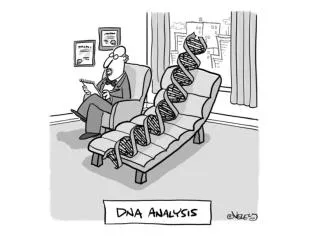
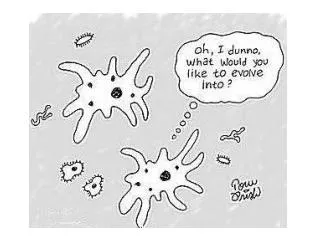
Question of the Day Question: Name the scientist this cartoon supports and describe his ideas. Answer: … … … 3’s Turn In: p. 453 A.Q. 1ab, 2ab
Types • 4 key areas of evidence: • Fossils • Morphology • Embryology • Biochemical
Fossils • Fossil- impressions or casts left behind by a prehistoric organism • Fossil record- the total of all fossils discovered
With Your Partner: • Label the fossils: • oldest youngest • simplest most complex • Answer: What does the fossil record tell us?
Fossils • Fossil record shows change over time • Predicts transitional forms
Fossils Transitional Forms of the Killer Whale
Morphology • Morphology- studying & comparing the physical structures of species • More homologous (similar & shared) features = more closely related species
Morphology • Ex: homologous limbs of human, cat, whale, bat shows close relation
Morphology • Not all similar features indicate closely related species Mammal Insect Bird