Download

1 / 10
100 likes | 210 Vues
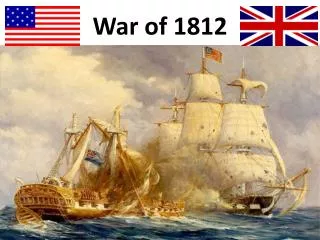
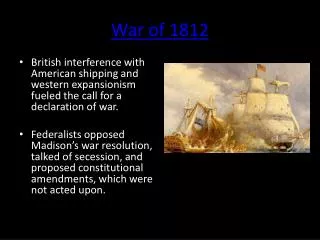
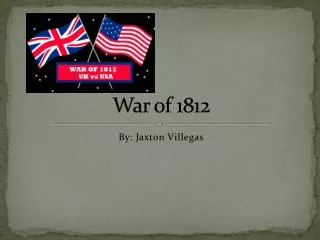
The War of 1812 was fueled by economic pressures and growing tensions between the U.S., Great Britain, and France. President James Madison, elected in 1808, sought to avoid conflict, yet as trade restrictions hurt southern planters and western farmers, support for war surged, especially among "War Hawks" from these regions. Battles like Tippecanoe ignited conflicts with Native Americans, culminating in Madison's declaration of war in 1812. Despite early setbacks, victories such as Lake Erie and Andrew Jackson's triumph in the Battle of New Orleans bolstered American nationalism and reputation abroad while ultimately restoring prewar boundaries with the Treaty of Ghent.

E N D
Economic Pressures • James Madison elected President in 1808 • Wanted to avoid war with GB or Fr. • US made different attempt to get GB & Fr. to remove trade restrictions • Fr. finally did in 1811
War Hawks • Many Americans wanted war with GB • Most that wanted war were Southerners and Westerners • Southern planters & western farmers were hurt by trade restrictions • They earned most of their income by shipping crops • Am also blamed GB for stirring up the Native Americans • War Hawks-Senators from the South & West that voted for the war • Ex- Henry Clay (KY) & John C. Calhoun (SC)
Tippecanoe • TECUMSEH • Native American leader that believed Nat. Amer. needed to unite to stop Americans from moving onto their land • Gov of IN territory, William Henry Harrison went to attack Prophetstown • Native Americans attack first • Fight near Tippecanoe river • Americans win • Battle of Tippecanoe makes many Native Americans flee to Canada • Many Americans are convinced GB encouraged the Native Americans • Madison declares war on GB in 1812
The Americans Attack • Madison orders an invasion of Canada • 3 American armies invade • First is easily defeated. • The other 2 fall apart when the NY militia refuses to cross the border (they opposed the war) • VICTORY ON LAKE ERIE • 1813- Oliver Perry (Am. naval commander) builds a fleet on Lake Erie • US controlled the Great Lakes
Native American Raids • Red Stick Creek- allies of GB • Attacked American settlers • Red Sticks attacked by militia at Burnt Corn Creek (Monroe County) • Red sticks win • Battle of Burnt Corn makes settlers realize they are vulnerable • Some settlers move to crude forts for protection • One is Fort Mims (in Baldwin County) • Creeks kill several 100 settlers
Andrew Jackson- Horseshoe Bend • News of Ft. Mims spread to TN • Gov sends TN militia led by Andrew Jackson to help • Jackson moves south through Alabama attacking Creeks • By 1814, gets word of a large Creek group at Horseshoe Bend on Tallapoosa River • Attacks and defeats Creeks • Battle of Horseshoe Bend ends Native American resistance in the Southern US
End of the War- Raids on Washington, DC • 1814- Napoleon’s France collapses • GB can now focus attention on the US • Planned to invade the US • GB landed troops and marched into Washington, DC • They burned the White House & Capitol • Next, they attacked Baltimore • Shelled Ft. McHenry all night, but it held • Br. withdrew
Treaty of Ghent • Peace negotiations began in 1814, while fighting continued • Treaty signed on Dec. 24, 1814. • Restored prewar boundaries • Did little else
The Battle of New Orleans • Fought in Jan, 1815, after Treaty of Ghent signed • Andrew Jackson defended the city for US • Am. soundly defeated the British • Jackson became a national hero • AFTERMATH • Increase US reputation overseas • Generated national unity and patriotism in the US