Understanding Defensive Responses: The Role of Brain Structures in Anxiety and Fear
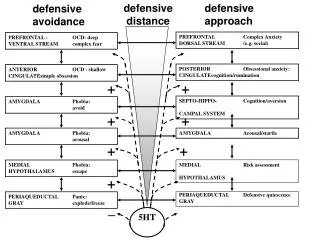
This overview explores complex defensive responses in the brain, particularly the roles of the prefrontal cortex, amygdala, and other structures in managing anxiety, phobias, and obsessive-compulsive behaviors. It highlights the interplay between the dorsal and ventral streams and examines how different brain regions like the cingulate gyrus and hypothalamus contribute to fear processing, risk assessment, and cognitive rumination. Understanding these relationships can enhance our approach to therapeutic interventions for anxiety and related disorders.

Understanding Defensive Responses: The Role of Brain Structures in Anxiety and Fear
E N D
Presentation Transcript
defensive distance defensive approach defensive avoidance PREFRONTAL Complex Anxiety DORSAL STREAM (e.g. social) PREFRONTAL - OCD: deep VENTRAL STREAM complex fear POSTERIOR Obsessional anxiety: CINGULATE cognition/rumination ANTERIOR OCD - shallow CINGULATE simple obsession + + SEPTO-HIPPO- Cognition/aversion CAMPAL SYSTEM AMYGDALA Phobia: avoid + + AMYGDALA Phobia: arousal AMYGDALA Arousal/startle + + MEDIAL Risk assessment HYPOTHALAMUS MEDIAL Phobia: HYPOTHALAMUS escape + PERIAQUEDUCTAL Defensive quiescence GRAY PERIAQUEDUCTAL Panic: GRAY explode/freeze – 5HT