Explore the Rich Tapestry of Mediterranean Countries: Italy, Greece, and Beyond
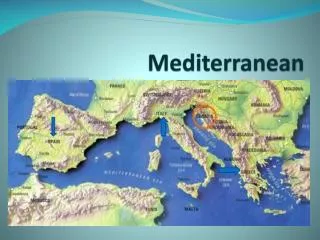
Journey through the Mediterranean, discovering the geographical and cultural richness of countries like Italy, Spain, Portugal, Sicily, and Greece. Embrace Italy’s boot-shaped peninsula, from the fertile north with its dairy and cured meats, to the hilly central regions with olives and grains, and the southern agricultural surprises. Delve into Italy’s profound cultural heritage from the Roman Empire to modern times, its influences on art, cuisine, and holidays, and experience the vibrant life of Italian villages filled with festivals celebrating their culinary traditions.

Explore the Rich Tapestry of Mediterranean Countries: Italy, Greece, and Beyond
E N D
Presentation Transcript
Geography and climate • Boot-shaped peninsula in the Mediterranean sea • North - beauty and rich lands • Most productive farming • Cured meats – pepperoni, pancetta, salami, & sausage • Central - mountainous and hilly • Grain, grapes, olives, goats, & sheep • South - poor in agricultural - important products • Olives, tomatoes & mozzarella
Italian Culture • Influence on Italian culture • Roman Empire • Renaissance • Time of great rebirth in art and learning • As Roman Empire declines to Roman Catholic church slowly gained power • Filled the need of leadership • From the wealthy people - art, literature, and science flourished
Italian Culture cont. • Modern culture in Italy • Italian agriculture • Half the land is used for farming • Machines cannot be used - all done by hand • North - dairy herds, largest cheese-producing region in the country • South - olives • Vineyards are scattered throughout • Italian holidays • Most are Roman Catholic • Easter, harvest festivals, Festa Dei Morti/All Soul’s Day, Christmas
Italian Culture cont. • Modern culture in Italy cont. • Villages hold olive and fish festivals – late summer and early fall
Italian Cuisine • During Renaissance, Italian cooking became the “mother cuisine” • History of Italian cuisine • At the beginning belongs to Greeks • Ancient Rome known for elaborate feast • Romans paid high prices for Greek chefs because good food was a status symbol
Italian Cuisine cont. • Characteristics of Italian cuisine • Lively, interesting, colorful, and varied - yet simple • Everything as fresh as possible - shop everyday • Many herbs, spices, and seasonings
Italian staple foods • Pasta - paste made from wheat flour that is dried in various shapes • Al dente: slightly resistant to the bite • Seafood • Rice - grain remain separate with a slight firmness • Pork, lamb, veal, and beef - sausage, wild game, and poultry • Meat is expensive so they then to extend the meat by adding it to sauces
Italian dairy products • Ice cream • Italians introduced ice cream to the rest of Europe • Granita - light sherbet made with powdery ice and coffee or fruit - flavored syrup • Gelati - made with milk, resemble vanilla and chocolate ice cream • Gelato - a rich ice cream, made with eggs and usually containing a relatively low percentage of butterfat. • Cheese • Parmesan • Mozzarella • Romano • Ricotta • Provolone • Gorgonzola • Asiago
Italian Pasta Products • Manicotti • Penne • Cannelloni • Tortellini • Fettuccine • Angel hair • Lasagna • Ravioli • Orecchiette
Italian beverages • Caffeeespresso - rich, dark, flavorful coffee • Caffettiera – coffeemaker • Darkly roasted, finely ground coffee beans • French roast in US • Vino – wine • Replaces water at meals
Italian Herbs • Garlic • Onion • Basil • Oregano • Rosemary • Sage • Saffron • Marjoram • Thyme
Pastry • Biscotti: twice baked cookie • Excellent for dipping in coffee • Pour batter in long pan – baked – sliced laid on their side and baked again • Cannoli: tubular pastry shells stuffed with a sweetened filling of whipped ricotta and often contain nuts, citron, or bits of chocolate
Bread • Focaccia: yeast flat bread drizzled with olive oil and sprinkled with herbs • This is where pizza began
Pizza • Pizza chef in Naples • Pizza – red sauce, mozzarella cheese & green basil • Colors of Italian flag to impress Italian queen Margherita • Crust thickness can vary from place to place • Traditional pizza baked in a wood-fired brick oven
Regional Italian Specialties • Northern Italy • Meat easier to obtain and less expensive • Dairy products more common • Cooking fat - butter • Stuffed pasta • Rich meat sauces • Savory types of meals • Cured meats – pepperoni, pancetta, salami, & sausage • Pasta Bolognese - pasta made with egg, ribbon shaped • Risotto: rice dish • Minstrone: soup
Regional Italian Specialties cont. • Northern Italy cont. • Ossobuco - calf’s leg between knee and hoof, served marrow • Pesto: sauce of ground fresh basil, pine nuts, garlic, parmesan cheese, and olive oil • Fettuccini noodles • Gnocchi: dumplings made from potatoes • Polenta: thick cornmeal porridge
Regional Italian Specialties cont. • Central Italy - Roman • Spaghetti - 25 different ways • Lamb • Cheesecake • Grain, grapes, olives, goats, & sheep
Regional Italian Specialties cont. • Southern Italy • Heavily spiced • Olive trees • Napoletana - tubular-shaped pasta • Rich tomato sauces • Mozzarella • Spaghetti and lasagna • Pizza - Neapolitan • Tomatoes and mozzarella • Type of cooking most people in the US are familiar with
Italian meals • Light breakfast • Hearty noon meal - largest of the day, usually eaten at home • Antipasto: is Italian for before the meal • Appetizer course – color and taste appeal • Soup - may replace antipasto • Main course of meat or pasta with sauce & usually a salad • Fruit and cheese • Lighter meal in the evening